Reflexology for neck and shoulder pain involves applying targeted pressure to specific zones on the feet—primarily the base of the toes and the ball of the foot—that correspond to the cervical spine and trapezius muscles. By utilizing techniques like thumb-walking on these reflex points, practitioners aim to interrupt pain signals, improve local blood circulation, and release muscular tension without directly manipulating the injured area.
The Physiology of Reflexology: Understanding the Connection
In the realm of holistic health, few modalities offer as accessible a path to pain relief as reflexology. While often mistaken for a simple foot massage, reflexology, as detailed in Understanding Reflexology: A Comprehensive Guide, is a disciplined practice based on the principle that there are reflexes in the feet, hands, and ears that correspond to every part, gland, and organ of the body. When addressing reflexology for neck and shoulder pain, we are engaging with the body’s nervous system to shift from a sympathetic state (fight or flight) to a parasympathetic state (rest and digest).
The theoretical framework of reflexology suggests that the body is mapped onto the feet. The human foot is an evolutionary marvel containing 26 bones, 33 joints, and over 7,000 nerve endings. These nerve endings are the communication highways that reflexologists utilize. When tension builds in the neck and shoulders—often due to poor posture, stress, or repetitive strain—energy pathways (or “zones”) can become blocked. By stimulating the corresponding foot reflexes, we send a signal through the peripheral nervous system to the central nervous system, prompting the brain to release endorphins and relax the targeted muscle groups.
Chronic neck pain is rarely an isolated event; it is frequently accompanied by restricted blood flow and inflammation. Reflexology aids in breaking down calcium crystals and uric acid deposits that may accumulate at nerve endings in the feet, thereby improving nerve function and blood supply to the corresponding area in the upper body. This non-invasive approach is particularly valuable for individuals whose neck or shoulder injuries are too acute for direct massage therapy, and can also be used for Accelerating Sports Injury Recovery.
Mapping the Toe-Neck Connection
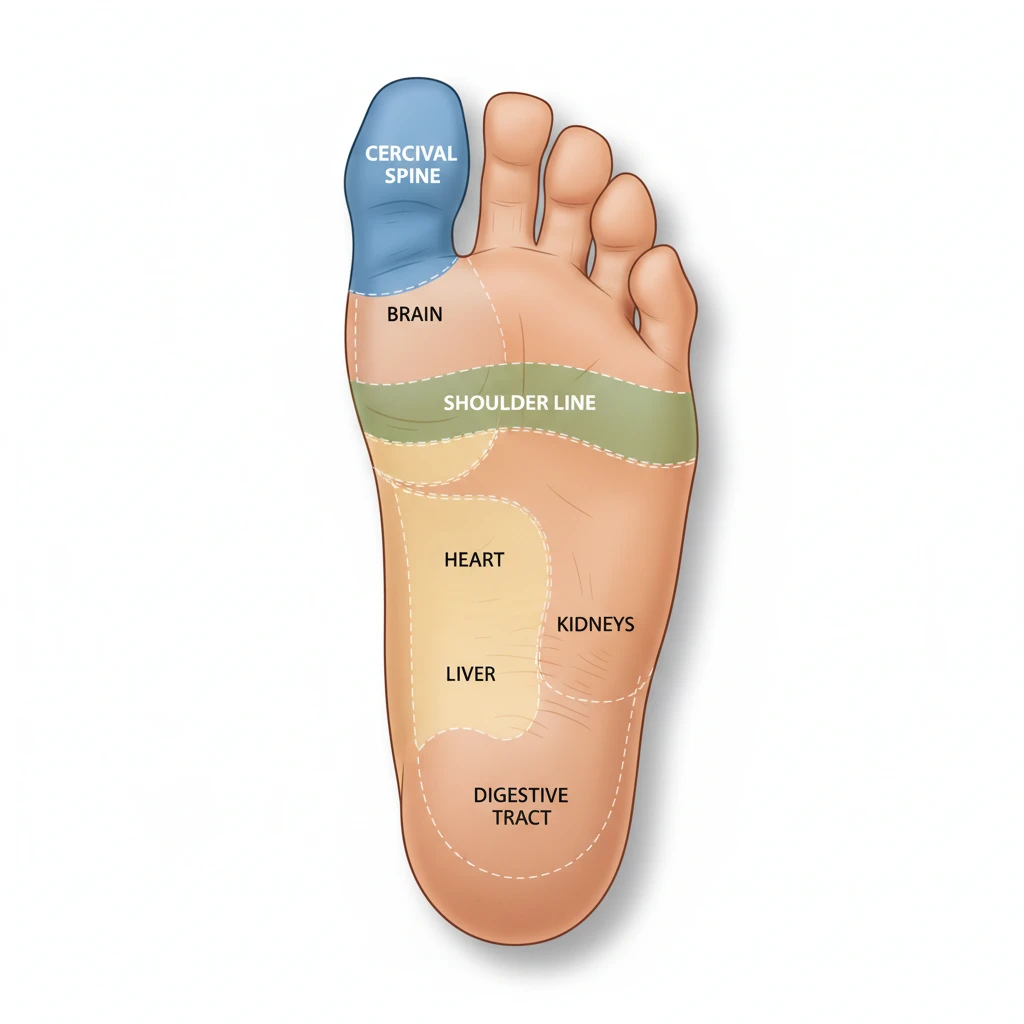
To effectively utilize reflexology for neck and shoulder pain, one must understand the anatomical reflection theory. Imagine the human body superimposed onto the feet: the head is represented by the toes, the spine runs along the medial (inner) edge of the foot, and the shoulders extend across the ball of the foot.
The Cervical Spine Reflex
The most critical area for neck pain is the cervical spine reflex. This is located at the base of the big toe (hallux). Specifically, the area where the big toe joins the foot corresponds to the C1-C7 vertebrae. If you are experiencing stiffness at the base of your skull or difficulty turning your head, this is the primary zone to target.
In many individuals suffering from chronic neck tension, this area of the foot may feel “crunchy” or granular under the skin. This texture indicates the presence of crystalline deposits and stagnation. Working this area helps to physically break down these deposits while energetically signaling the neck muscles to elongate and relax.
The Neck Rotation Points
While the spinal reflex is on the big toe, the reflexes for the muscular structure of the neck extend to the bases of the smaller toes. The “neck ridge” is the crease where your toes connect to the main body of the foot. Pinching and massaging the base of all five toes can help release the sternocleidomastoid and scalene muscles, which are often responsible for tension headaches and anterior neck tightness.
Relieving Trapezius Tightness via the Ball of the Foot
The trapezius muscle is a large, triangular muscle covering the upper back, shoulders, and neck. It is the most common site for stress-related tension knots. In reflexology, the shoulder line is located on the plantar aspect (sole) of the foot, specifically on the ball of the foot, just below the toes.
This area is often referred to as the “shoulder ridge.” It runs horizontally across the foot from the base of the little toe toward the big toe. The area directly under the little toe corresponds to the outer shoulder (deltoid and rotator cuff area), while moving inward addresses the trapezius and rhomboids.
For those with severe shoulder tightness, the ball of the foot may feel tight or callused. According to the National Center for Complementary and Integrative Health (NCCIH), reflexology practices may aid in relaxation and symptom management for various conditions, including specific areas like IVF and IUI Support Protocols, supporting the anecdotal evidence that working these zones can alleviate referred pain in the upper torso.
The Solar Plexus Point
While not a muscle reflex, the solar plexus point is crucial for shoulder tension caused by emotional stress. Located in the center of the diaphragm line (just under the ball of the foot between the second and third toes), pressing this point encourages deep breathing. Since shallow breathing often causes the shoulders to rise and tighten, relaxing the diaphragm is a secondary but vital strategy for long-term shoulder relief.
Step-by-Step Self-Reflexology Routine
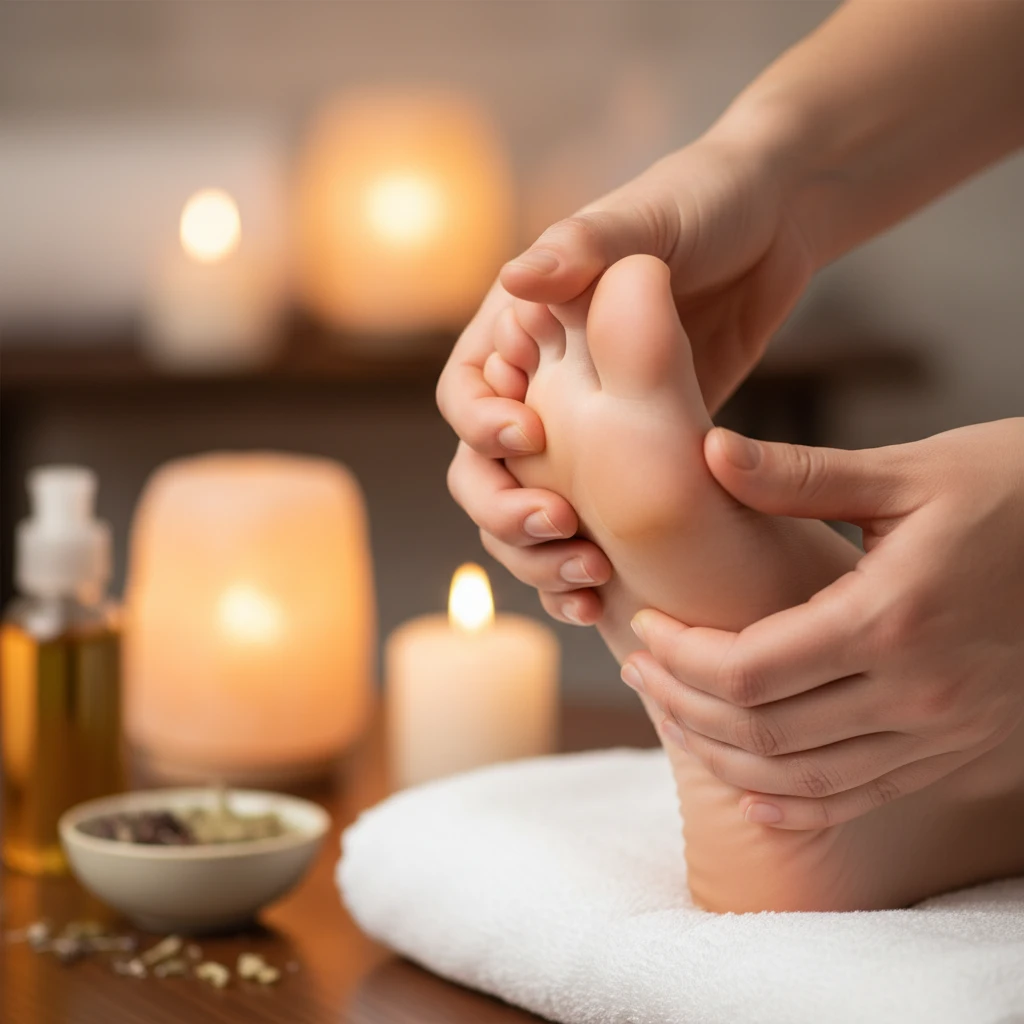
Performing reflexology on yourself is highly effective if done with the correct technique. The most common method used is “thumb-walking,” which involves bending and straightening the thumb joint to inch along the skin, providing a consistent, caterpillar-like pressure.
Preparation
Sit comfortably in a chair or on the floor where you can easily reach your feet. You may use a small amount of lotion or oil, though traditionalists often prefer dry skin to prevent slipping.
1. Warm-Up
Begin by holding the foot with both hands. Gently twist the foot back and forth, loosening the ankle and metatarsals. This mimics the rotation of the neck and prepares the tissues for deeper work.
2. Targeting the Cervical Spine
- Locate: Find the medial edge of the big toe, specifically the proximal phalanx (the bone closest to the foot).
- Action: Support the toe with one hand. With the thumb of your working hand, thumb-walk up the inside of the toe from the base to the tip, and then back down.
- Repetition: Repeat this 5-10 times. Focus extra pressure on the base where the toe meets the foot. If you find a tender spot, hold static pressure for 10 seconds.
3. Working the Neck Ridge
- Locate: The crease at the base of all five toes on the sole of the foot.
- Action: Use your thumb to press and slide across this ridge from the big toe to the pinky toe.
- Technique: You can also use a “pinching” motion, grasping the base of each toe between your thumb and index finger, rotating gently.
4. Releasing the Shoulders (The Ball of the Foot)
- Locate: The padded area of the sole, just below the toes.
- Action: Use your thumb (or knuckles if you need deeper pressure) to work horizontally across the ball of the foot. Start from the outer edge (under the pinky toe) and work inward.
- Focus: Spend extra time on the area below the little toe and the fourth toe, as this is the direct reflex for the outer shoulder and arm.
The Desk Worker’s 10-Minute Protocol
For office workers, neck and shoulder pain is an occupational hazard. The “tech neck” phenomenon results from prolonged forward head posture. You can perform a modified version of reflexology even while seated at your desk, sometimes using a golf ball or simply crossing your legs.
Minute 0-2: Foot Rolling. Remove your shoes. Place a golf ball or a tennis ball under the ball of your foot. Roll it vigorously back and forth. This stimulates the shoulder line and the lung reflexes, encouraging deeper breathing and shoulder drop.
Minute 2-5: The Big Toe Squeeze. Cross your right ankle over your left knee. Use your left hand to grasp your right big toe. Use your thumb to firmly massage the base of the toe in circular motions. Rotate the toe clockwise and counter-clockwise to mimic head rotation.
Minute 5-8: The Ridge Walk. While the foot is still crossed, use your knuckles to drag across the ball of the foot, moving from the pinky side toward the big toe. This releases the trapezius reflex.
Minute 8-10: Solar Plexus Reset. Press your thumb deeply into the center of the foot, just below the ball. Inhale deeply for 4 counts, hold for 4, and exhale for 4. Repeat on the other foot.
Enhancing Relief: Combining Reflexology with Heat Therapy
To maximize the efficacy of reflexology for neck and shoulder pain, it is highly recommended to integrate heat therapy. Heat expands blood vessels (vasodilation), which enhances the circulatory benefits of reflexology.
The Epsom Soak Pre-Treatment
Before beginning your reflexology routine, soak your feet in a basin of hot water with half a cup of Epsom salts (magnesium sulfate). Magnesium is a natural muscle relaxant and can be absorbed transdermally. Soaking for 15 minutes softens the skin, making the reflex points more accessible, and begins the systemic relaxation process.
Heated Towel Compression
After performing the reflexology routine, wrap the feet in warm, damp towels. This keeps the energy “contained” and prevents the feet from cooling down too rapidly, which can cause muscles to contract again. Simultaneously, placing a heating pad on the actual neck and shoulders while working on the feet creates a dual-action therapy—neurological relief from the feet and physiological relief at the site of pain.
Safety, Precautions, and Contraindications
While reflexology is generally safe, it is a potent therapy that moves fluid and alters nerve function. There are specific instances where caution is required.
- Foot Injuries: Do not perform reflexology on a foot with fractures, unhealed wounds, or active gout.
- Thrombosis: Individuals with a history of deep vein thrombosis (DVT) or blood clots in the legs should avoid vigorous foot massage to prevent dislodging a clot.
- Pregnancy: While reflexology can be beneficial during pregnancy, certain points are known to stimulate uterine contractions. It is imperative to consult with a certified prenatal reflexologist before attempting self-treatment if you are pregnant.
- Acute Illness: If you have a high fever or an active infection, wait until you have recovered. Reflexology increases circulation, which can inadvertently spread infection through the lymphatic system faster.
According to reputable health resources like Healthline and various reflexology associations, staying hydrated after a session is crucial. The release of toxins and metabolic waste requires water to flush the system effectively. Failure to drink water may result in a mild headache or sluggishness post-treatment.
By incorporating these reflexology techniques into your wellness routine, you empower yourself to manage neck and shoulder tension proactively. The feet offer a unique and effective doorway to healing the upper body, proving that everything in our physiology is interconnected.
People Also Ask
Where do I press on my foot for neck pain?
For neck pain, press firmly on the base of the big toe (where the toe joins the foot) and the medial aspect (inside edge) of the big toe. This area corresponds to the cervical spine. Massaging the ridge at the base of all toes also helps release neck tendons.
Can reflexology get rid of shoulder knots?
Reflexology can help dissolve shoulder knots by improving blood circulation to the trapezius muscle and triggering a parasympathetic nervous system response. By working the ball of the foot (the shoulder reflex zone), you signal the shoulder muscles to relax, which can soften knots over time.
How long does it take for reflexology to work for pain?
Many people feel immediate relaxation during the session. However, significant pain relief for chronic neck and shoulder issues usually requires consistent practice. A daily 10-15 minute routine often yields noticeable results within 1 to 2 weeks.
Why does my neck hurt when I press my foot?
If you feel tenderness or a “referral” sensation in your neck when pressing your foot, it confirms the connection between the reflex point and the problem area. Tenderness in the foot often indicates congestion or tension in the corresponding body part.
Can I do reflexology on myself?
Yes, self-reflexology is highly effective and safe for most people. The feet are easily accessible for self-treatment. Using techniques like thumb-walking or using a reflexology ball can allow you to manage pain without a therapist.
How often should I do reflexology for neck and shoulder pain?
For acute pain, you can perform short, gentle sessions daily. For maintenance and chronic tension prevention, 3 to 4 times a week is recommended. Avoid overworking the feet; 15 minutes per session is sufficient.