Reflexology in Auckland is a holistic complementary therapy primarily involving targeted pressure on specific points on the feet, hands, or ears. These points are believed to correspond to organs and systems throughout the body, aiming to promote relaxation, reduce stress, and restore the body’s natural balance and healing capabilities.
What is Reflexology? A Foundational Understanding
Reflexology stands as a distinctive complementary health therapy, a non-invasive practice focused on stimulating specific reflex points primarily on the feet, but also on the hands and ears. These points are believed to be intricately linked to various organs, glands, and systems throughout the body. By applying appropriate pressure to these reflexes, practitioners aim to stimulate the body’s inherent healing processes, fostering a profound sense of relaxation and well-being. Unlike a conventional massage, reflexology targets these specific points with precise techniques, operating on the premise that the body is a complex network of interconnected pathways.
Defining Reflexology: An Ancient Healing Art
At its core, reflexology is more than just a foot massage; it’s a therapeutic practice rooted in the understanding that our extremities hold a detailed ‘map’ of our entire physiology. Each tiny area on the foot, hand, or ear serves as a microcosm, mirroring the macrocosm of the body. A skilled reflexologist uses thumbs and fingers to apply varying degrees of pressure to these specific points, aiming to break down energetic blockages and encourage the free flow of vital energy. This meticulous approach seeks to address not just physical symptoms but also the underlying imbalances that might contribute to discomfort or disease, promoting a holistic restoration of health.
The Historical Journey of Reflexology
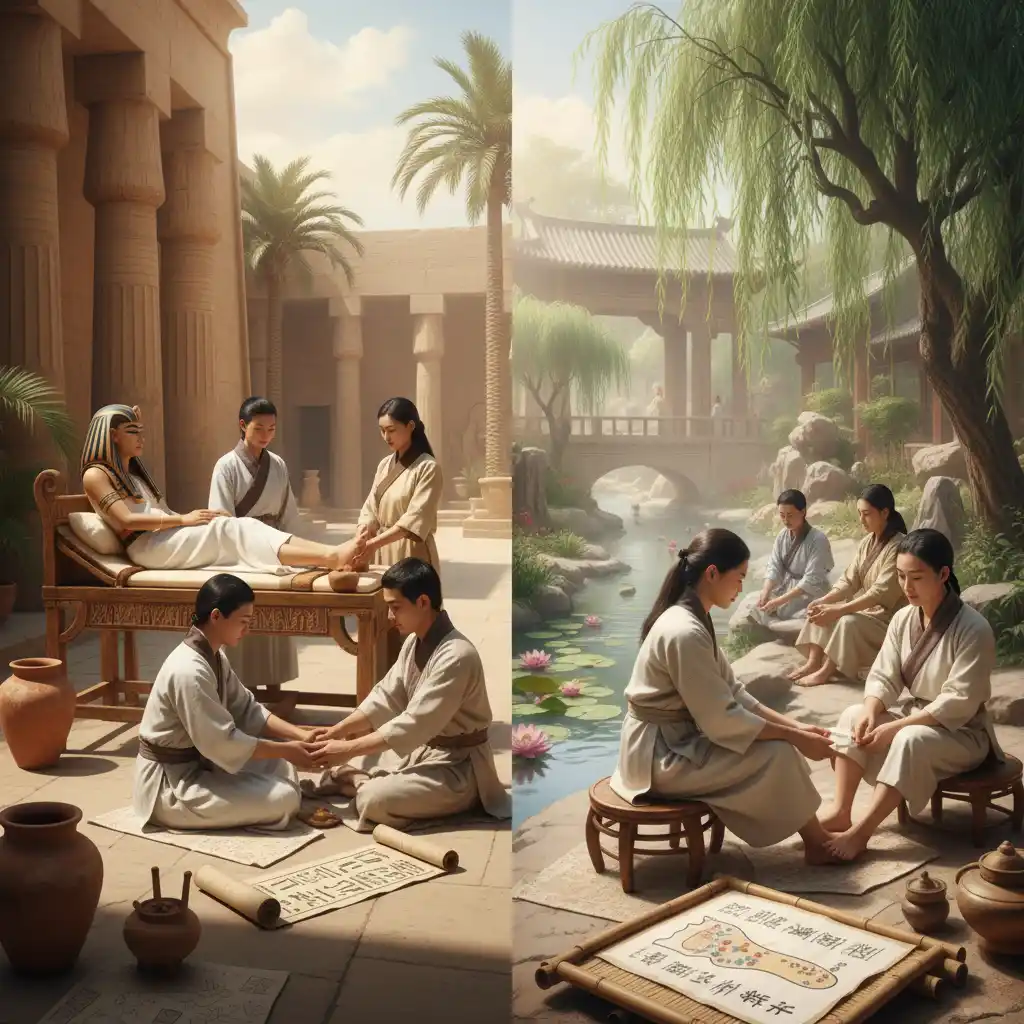
The origins of reflexology can be traced back thousands of years, with evidence of similar practices found in ancient Egyptian, Chinese, and Indian cultures. Hieroglyphs depicting foot and hand therapies have been discovered in Egyptian tombs dating back to 2330 BCE, suggesting that these practices were an integral part of ancient health traditions. In China, ancient texts describe the use of pressure point therapy on the feet, closely tied to the principles of acupuncture and acupressure. The modern understanding and practice of reflexology began to take shape in the early 20th century, largely credited to Dr. William H. Fitzgerald, an American ear, nose, and throat specialist. He developed ‘Zone Therapy,’ postulating that the body is divided into ten longitudinal zones, and pressure applied to one part of a zone could affect other parts within the same zone. Later, in the 1930s, Eunice Ingham, a physiotherapist, further refined Zone Therapy into what is recognised today as modern reflexology. She meticulously mapped the entire body onto the feet, demonstrating that the reflexes on the feet were an exact mirror image of the organs of the body. Ingham’s dedicated research and practical application solidified the foundation for contemporary reflexology, popularising it globally. For a deeper dive into its historical context, consult authoritative sources such as Wikipedia’s entry on Reflexology.
Modern Reflexology: Evolution and Recognition
In contemporary times, reflexology has evolved from a relatively obscure practice into a widely recognised and respected complementary therapy. It is increasingly integrated into wellness centres, spas, and even some healthcare settings around the world, including Auckland. Professional organisations and regulatory bodies have emerged, establishing standards for training, ethics, and practice, ensuring that practitioners are highly skilled and knowledgeable. This formalisation has bolstered public trust and scientific interest, leading to more research exploring its efficacy for various conditions. Modern reflexology emphasises a client-centred approach, tailoring treatments to individual needs and preferences, while maintaining its core principles of promoting balance and natural healing within the body.
Core Principles: The Science and Art Behind Reflexology
Understanding reflexology goes beyond merely applying pressure to the feet; it delves into a sophisticated framework of interconnected principles that underscore its holistic efficacy. These core theories provide the foundation upon which practitioners in Auckland and worldwide build their therapeutic approach, aiming to restore the body’s natural equilibrium.
Zone Theory and Reflex Maps
At the heart of modern reflexology lies the concept of Zone Theory, pioneered by Dr. William H. Fitzgerald. This theory posits that the body is divided into ten longitudinal zones, running from the tips of the toes and fingers up to the top of the head. Each zone encompasses specific organs, glands, and body parts. Consequently, applying pressure to any point within a zone on the foot or hand is believed to affect other areas within the same zone. For instance, problems in the head might be addressed by working on the tips of the toes within the corresponding zone. Building upon this, Eunice Ingham developed detailed ‘reflex maps’ of the feet and hands. These intricate maps illustrate specific points or areas that correspond precisely to every organ, gland, and part of the body. For example, the big toe might correspond to the head and brain, the ball of the foot to the lungs and heart, and the heel to the lower back and sciatic nerve. By systematically working through these maps, reflexologists can target specific areas of concern within the body, even if the primary issue manifests elsewhere.
Energy Pathways and Holistic Connections
Reflexology aligns with ancient Eastern philosophies that view the body as a complex system of energy pathways. Similar to concepts like ‘Qi’ in Traditional Chinese Medicine or ‘Prana’ in Ayurvedic medicine, reflexology operates on the belief that a vital life force flows through these pathways. When these energy channels become blocked or imbalanced due to stress, illness, or injury, it can lead to dysfunction and discomfort in the corresponding body parts. Reflexology aims to identify and clear these blockages, facilitating the smooth and harmonious flow of energy throughout the body. By restoring this energetic balance, reflexology supports the body’s innate ability to heal itself. This holistic perspective acknowledges that physical symptoms are often manifestations of deeper energetic or emotional imbalances, thus treating the individual as a whole rather than just addressing isolated symptoms.
The Body’s Innate Healing Capacity
A fundamental principle of reflexology is its trust in the body’s remarkable innate ability to heal itself and maintain a state of balance, known as homeostasis. Rather than directly