Reflexology for slipped disc is a specialized complementary therapy that involves applying targeted pressure to specific zones on the feet, primarily along the medial arch which corresponds to the spine. This practice aims to stimulate nerve pathways, reduce systemic inflammation, and alleviate the muscle spasms and pain signals associated with a herniated nucleus pulposus.
A herniated disc, often referred to as a slipped disc, represents one of the most debilitating forms of back pain, affecting the structural integrity of the spine and the quality of life of those who suffer from it. While conventional medicine offers solutions ranging from physical therapy to surgery, many individuals seek holistic, non-invasive methods to manage pain and support the body’s natural healing process. Reflexology serves as a powerful adjunctive therapy in this domain, bridging the gap between relaxation and physiological pain management.
Understanding the Connection: Reflexology and Spinal Health
To comprehend how reflexology aids in the management of a slipped disc, one must first understand the underlying mechanism of the condition and the theory behind the therapy. A herniated disc occurs when the soft, jelly-like center (nucleus pulposus) of a spinal disc pushes out through a tear in the tougher exterior (annulus fibrosus). This can irritate nearby nerves, resulting in pain, numbness, or weakness in an arm or leg.
Reflexology operates on the principle of “zone theory,” which posits that the body is divided into ten vertical zones running from the head to the toes. Practitioners believe that specific points on the feet, hands, and ears—known as reflex points—correspond to specific organs, glands, and body parts. By stimulating these points, a reflexologist aims to restore homeostasis and encourage the body to heal itself.
In the context of a slipped disc, the primary focus is the spinal reflex, which is located along the medial (inner) edge of the foot. The curvature of the foot mirrors the curvature of the spine. By working this area, practitioners aim to improve blood flow to the spinal region, reduce the stress signals sent by the nervous system, and release endorphins, the body’s natural painkillers.

Safety Precautions for Spinal Injuries
Before engaging in any form of alternative therapy for a herniated disc, safety must be the paramount concern. While reflexology is generally considered safe because it is non-invasive and does not involve manipulating the spine directly, there are critical precautions to observe.
First and foremost, consult a medical professional. A slipped disc is a structural medical issue. Reflexology should be used as a supportive therapy, not a replacement for medical advice, physical therapy, or necessary surgical interventions. According to the Mayo Clinic, untreated severe herniated discs can lead to permanent nerve damage, so professional diagnosis is non-negotiable.
Contraindications and Warning Signs
- Acute Phase Inflammation: In the first 48-72 hours of an acute injury, the body is in a state of high inflammation. Deep pressure on reflex points might trigger a “healing crisis” or temporary flare-up. Extremely gentle touch is required during this phase.
- Deep Vein Thrombosis (DVT): If the slipped disc has caused immobility leading to blood clots in the legs, reflexology is contraindicated as it increases circulation and could dislodge a clot.
- Foot Injuries: If the patient has fractures, open wounds, or severe gout in the feet, hand reflexology should be substituted.
The Anatomy of Relief: Mapping the Spine on the Foot
Effective reflexology for a slipped disc relies on precise mapping. The spinal reflex is located along the medial aspect of the foot—the inside edge running from the big toe to the heel. This line represents the entire vertebral column.
Cervical Spine (Neck)
The reflex points for the cervical spine (C1-C7) are located on the medial aspect of the big toe, specifically the proximal phalanx. If the herniation is in the neck, this is the primary area of focus.
Thoracic Spine (Upper/Mid Back)
Moving down from the base of the big toe along the long bone (first metatarsal) towards the arch, you traverse the thoracic spine reflex. This area corresponds to the chest and mid-back region.
Lumbar Spine (Lower Back)
The lumbar region is the most common site for herniated discs. The reflex point for the lumbar vertebrae (L1-L5) is found along the medial cuneiform and navicular bones—essentially the highest part of the arch down toward the heel. Sensitivity in this area of the foot often correlates with lower back pain.
Sacrum and Coccyx (Tailbone)
The reflex for the sacrum and coccyx curves around the heel bone (calcaneus). Working this area is vital for sciatica, a frequent symptom of lumbar disc herniation.
Gentle Nerve Pathway Stimulation Techniques
When addressing a slipped disc, the goal is not to “rub out” the pain with force, but to communicate with the nervous system. The technique used is often referred to as “thumb walking” or “caterpillar walking.”
Thumb walking involves bending and extending the first joint of the thumb to creep along the reflex area. This creates a rhythmic, pulsating pressure that is more effective at stimulating nerve endings than a static press. For a slipped disc, the practitioner should work the spinal reflex line from the heel toward the toe (up the spine) and from the toe toward the heel (down the spine).
The Nervous System Loop: By stimulating the foot, a signal travels through the peripheral nervous system to the central nervous system. The brain processes this signal and sends a response to the corresponding body part—in this case, the spine—to relax muscles and dilate blood vessels. This improved circulation helps flush out inflammatory cytokines that accumulate around the herniated disc.
Reducing Surrounding Muscle Spasms and Inflammation
A herniated disc rarely exists in isolation. The body’s natural guarding mechanism causes the surrounding muscles (erector spinae, multifidus, and others) to spasm in an attempt to stabilize the spine. Often, the muscle spasm causes as much pain as the disc itself. Reflexology addresses this by targeting auxiliary points beyond just the spinal line.
The Adrenal Gland Reflex
Located just below the ball of the foot, roughly in line with the second toe, lies the adrenal reflex. Stimulating this point is crucial for inflammation management. The adrenal glands produce cortisol, the body’s natural anti-inflammatory hormone. Gentle stimulation here can help regulate the body’s inflammatory response to the disc injury.
The Sciatic Nerve Reflex
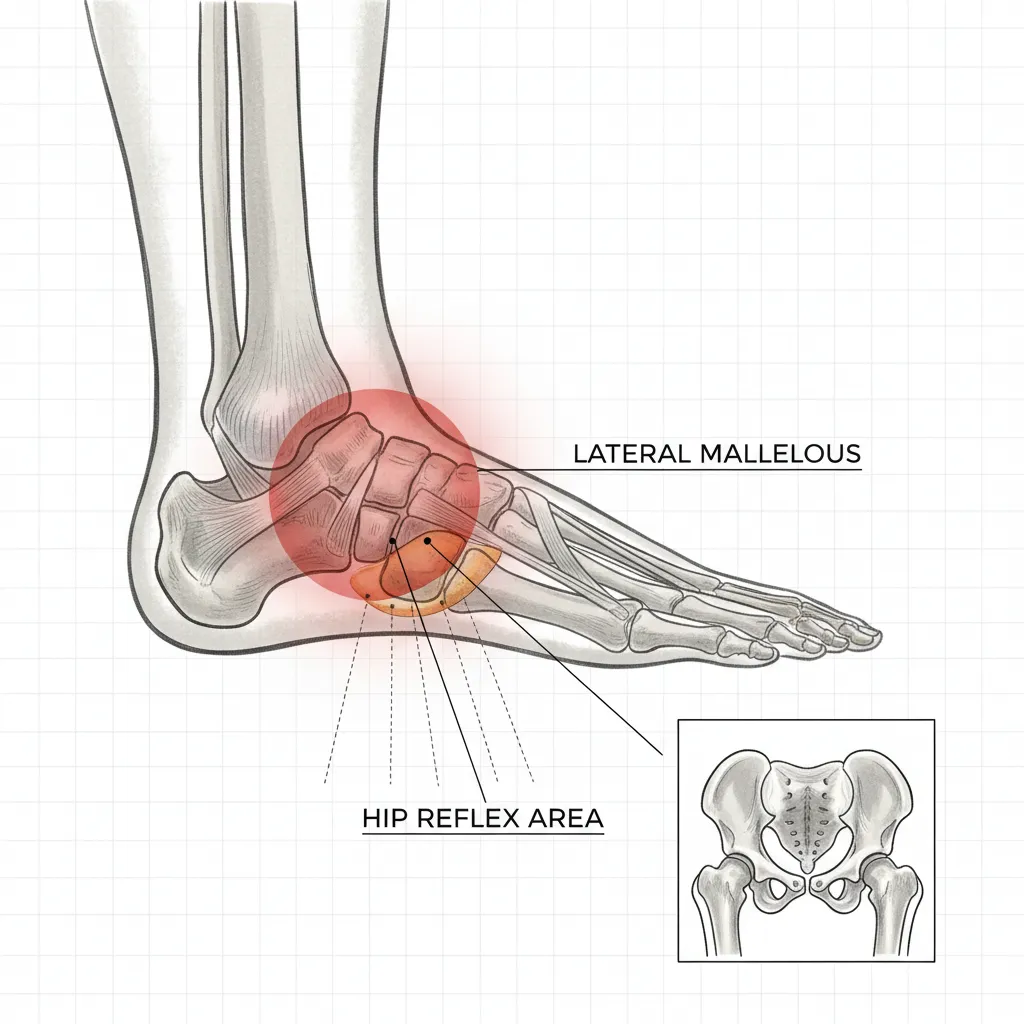
For those suffering from sciatica due to a slipped disc, the sciatic nerve reflex is essential. This is not a pinpoint but a band running across the heel. Some practitioners also work the “sciatic loop” around the ankle bones (malleoli). Gently working this area can help interrupt the pain signals traveling down the leg.
Hip and Knee Reflexes
Pain alters gait. When a person has a slipped disc, they walk differently to avoid pain, which stresses the hips and knees. Working the hip reflexes (located on the lateral/outside ankle) and knee reflexes helps maintain structural balance and reduces secondary pain.

A Step-by-Step Reflexology Routine for Slipped Discs
While professional treatment is recommended, a gentle home routine (performed by a partner) can provide interim relief. Ensure the recipient is lying comfortably, preferably with a pillow under their knees to offload the lower back.
- Relaxation Warm-up: Begin with gentle foot massage, rotating the ankles and squeezing the foot to warm up the tissue. Press the Solar Plexus point (center of the foot, just below the ball) while the recipient takes deep breaths. This engages the parasympathetic nervous system.
- Spinal Flush: Using the thumb-walking technique, traverse the entire medial edge of the foot from the heel to the big toe. Repeat this 3-5 times. Note any “crunchy” feelings (crystal deposits) but do not overwork them.
- Lumbar Focus: If the injury is in the lower back, spend extra time on the arch area. Use gentle circular rotations with the thumb.
- Sciatic Sweep: Firmly stroke across the heel from the inner to the outer side. Then, use fingers to gently massage around the ankle bones.
- Adrenal Support: Press and hold the adrenal point for 10-15 seconds.
- Cool Down: Finish by holding the feet with both hands, providing a grounding, static touch for one minute.
Long-Term Management Strategy
Reflexology is most effective as part of a cumulative long-term management strategy rather than a one-time fix. Chronic conditions like degenerative disc disease or recurring herniations require consistent maintenance.
Frequency of Sessions: For acute pain (after the initial 48-hour window), sessions might be beneficial twice a week. As symptoms subside, this can taper to once a week, and eventually once a month for maintenance.
Hydration is Key: Reflexology stimulates the lymphatic system and elimination pathways. It is vital to drink significantly more water after a session to help the body flush out metabolic waste products released from tense muscles.
Integration with Other Therapies:
Reflexology shines when combined with physical therapy. PT strengthens the core to support the spine, while reflexology keeps the muscles relaxed and manages pain perception. This dual approach addresses both the mechanical and neurological aspects of a slipped disc.
Scientific Perspective: What the Evidence Says
While clinical trials specifically isolating reflexology for herniated discs are limited, broader research into reflexology for low back pain is promising. The National Center for Complementary and Integrative Health (NCCIH) notes that reflexology may be a helpful addition to standard care for pain and anxiety.
Several studies suggest that reflexology significantly reduces pain intensity and improves the range of motion in patients with chronic lower back pain. The mechanism is believed to be a combination of the “Gate Control Theory” of pain (where touch signals override pain signals) and the reduction of cortisol levels, leading to a state of deep relaxation where healing can occur.
Conclusion
Reflexology for a slipped disc offers a gentle, non-invasive avenue for pain relief and healing. By targeting the spinal reflexes, sciatic loops, and adrenal points, this therapy supports the body’s ability to reduce inflammation and muscle spasms. When used responsibly alongside conventional medical care, it empowers individuals to take an active role in their recovery journey, moving from a state of pain to a state of balance and wellness.
People Also Ask
Can reflexology cure a slipped disc?
No, reflexology cannot mechanically “cure” a slipped disc by pushing the nucleus pulposus back into place. However, it can significantly alleviate the symptoms, such as pain, inflammation, and muscle spasms, creating a better environment for the body to heal itself naturally.
Is it safe to do reflexology if I have severe back pain?
Generally, yes, because reflexology is performed on the feet and does not involve manipulating the spine directly. However, if you are in the acute phase of an injury (first 48 hours) or have severe nerve damage, you should consult your doctor before beginning treatment.
Which foot corresponds to the back pain?
Reflexology follows the body’s anatomy. The left foot corresponds to the left side of the body, and the right foot corresponds to the right side. However, because the spine runs down the center, the spinal reflex is located on the medial (inner) arch of both feet.
How often should I get reflexology for a herniated disc?
For active pain, many practitioners recommend 1 to 2 sessions per week. As the pain subsides, you can reduce frequency to once every two weeks or once a month for maintenance and stress reduction.
Can reflexology make back pain worse?
It is rare, but possible to experience a “healing crisis” where symptoms temporarily flare up for 24 hours after a session due to the release of toxins and increased circulation. If pain persists longer than that, the pressure used may have been too deep.
What are the best pressure points for lower back pain?
The most effective points are the spinal reflex along the inner arch of the foot, the sciatic nerve reflex across the heel, and the adrenal gland point located under the ball of the foot to help manage inflammation.