Reflexology for irregular periods is a holistic therapeutic practice involving targeted pressure on specific points of the feet and hands that correspond to the endocrine and reproductive organs. By stimulating reflexes linked to the pituitary gland, ovaries, and uterus, this modality aims to restore hormonal balance, reduce stress-induced cycle disruption, and encourage the body to return to a regular menstrual rhythm.
Irregular menstruation, medically known as oligomenorrhea, affects a significant percentage of women worldwide. Whether caused by Polycystic Ovary Syndrome (PCOS), thyroid dysfunction, extreme stress, or coming off hormonal birth control, an unpredictable cycle can be a source of anxiety and physical discomfort. While modern medicine offers pharmacological solutions, many individuals seek natural, non-invasive methods to support their reproductive health.
Reflexology offers a compelling complementary approach. Based on the principle that the feet are microcosms of the entire body, a reflexologist can access the body’s internal systems through specific nerve endings. This guide serves as a definitive resource on how to utilize reflexology to support cycle regulation, alleviate PMS, and foster long-term reproductive wellness. Understanding Reflexology: A Comprehensive Guide offers further insights.
Understanding the Connection Between Reflexology and Menstruation
To understand how foot massage can influence menstruation, one must look at the body’s control center: the endocrine system. The menstrual cycle is a complex symphony of hormones orchestrated by the Hypothalamic-Pituitary-Ovarian (HPO) axis. When communication within this axis is disrupted—often due to stress, diet, or illness—cycles become irregular.
Reflexology operates on the theory of “zone therapy.” By applying pressure to specific zones, practitioners believe they can clear blockages in the flow of energy (Qi) and improve blood circulation to the corresponding organs. In the context of irregular periods, the primary goal is to shift the body from a sympathetic state (fight or flight) to a parasympathetic state (rest and digest). High levels of cortisol (the stress hormone) are known to suppress reproductive hormones; therefore, the deep relaxation provided by reflexology is, in itself, a cycle-regulating mechanism.
Key Reflexology Points for Irregular Periods
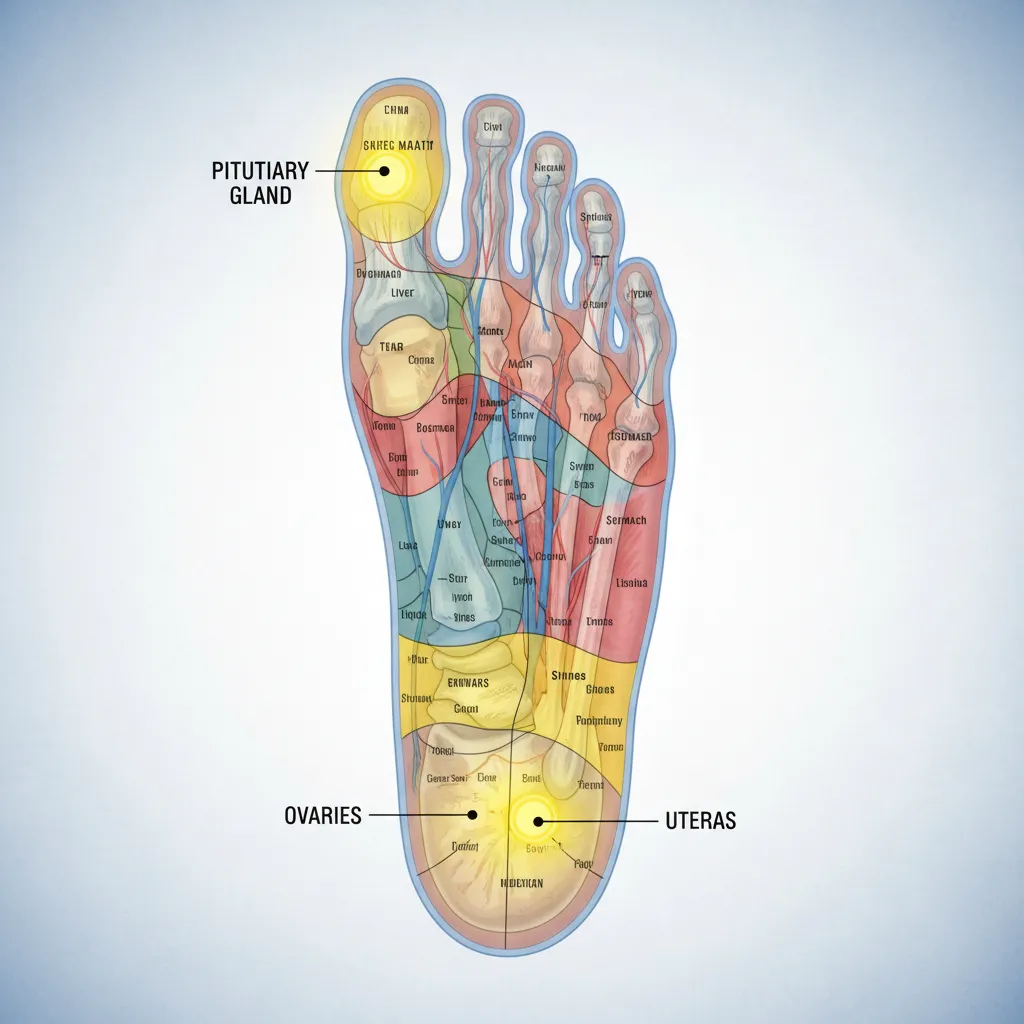
Effective reflexology for irregular periods relies on precision. While a general foot massage is relaxing, targeting specific reflexes yields the best therapeutic results. The following points are critical for reproductive health.
The Pituitary Gland: The Master Conductor
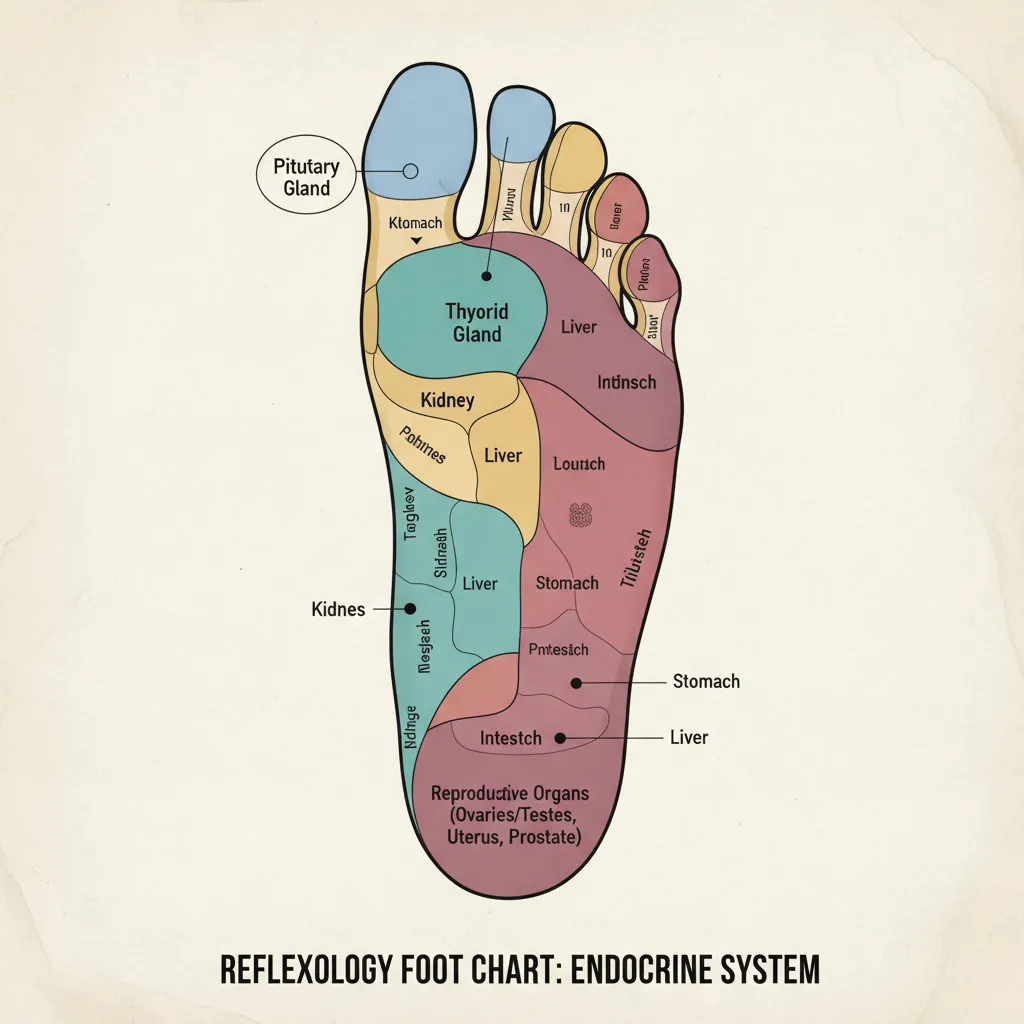
Located in the center of the whorl of the big toe, the pituitary reflex is the most important point for hormonal regulation. The pituitary gland releases Follicle-Stimulating Hormone (FSH) and Luteinizing Hormone (LH), which signal the ovaries to release an egg. If the pituitary is sluggish or overactive, ovulation becomes erratic.
Technique: Support the big toe with one hand. With the other hand, use the side of your thumb to press deeply into the center of the toe pad. Use a pivoting or rotating motion for 30–60 seconds. This stimulation encourages the “master gland” to optimize its signaling to the ovaries.
The Ovaries: The Production Centers
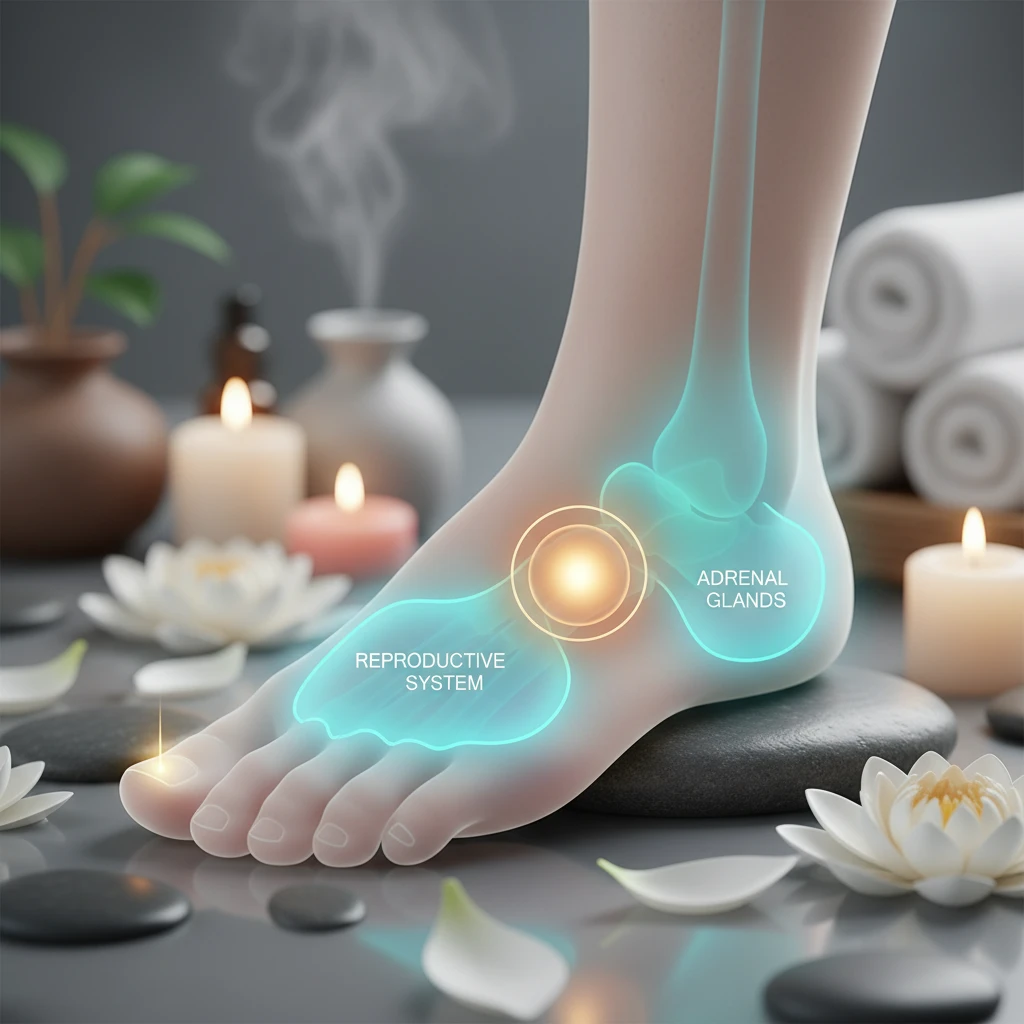
The reflex points for the ovaries are located on the outside of the foot, midway between the ankle bone and the heel. Tenderness in this area often correlates with ovulation pain or cysts.
Technique: Locate the soft depression on the outer side of the foot beneath the ankle bone. Use your index finger or thumb to apply firm, steady pressure. You can use a “hook and backup” technique here. Stimulating this area helps encourage healthy ovulation and the production of estrogen and progesterone.
The Uterus: The Womb Reflex
Mirroring the ovaries, the uterus reflex is found on the inside of the foot, in the hollow space between the inner ankle bone and the heel. This point is vital for regulating the shedding of the lining and managing flow.
Technique: Using your thumb, press into the inner ankle hollow. Gently massage in a circular motion. This is particularly soothing for women who experience clots or stagnation in their menstrual flow.
Balancing Hormones: Estrogen and Progesterone
An irregular cycle is often a symptom of estrogen dominance or low progesterone. Reflexology protocols address this by working on the organs responsible for metabolizing and balancing these hormones.
Liver Function and Hormone Metabolism
The liver is the body’s filtration plant. It is responsible for breaking down excess estrogen and excreting it from the body. If the liver is congested, excess estrogen recirculates, leading to irregular bleeding, heavy periods, and PMS. The liver reflex is located on the right foot only, in the middle outer section.
Protocol: Apply “thumb walking” techniques across the middle of the right foot. Visualize the liver detoxifying the blood. Improving liver function is a cornerstone of holistic hormone balance.
Thyroid Health
Hypothyroidism is a leading cause of missed periods (amenorrhea) and heavy bleeding. The thyroid reflex wraps around the base of the big toe (the neck area of the foot). Stimulating this band helps regulate metabolism and supports the overall endocrine system. For comprehensive information on how reflexology aids in Metabolism Boosting & Weight Management, refer to our related article.
Managing Dysmenorrhea and Menstrual Cramps
Dysmenorrhea, or painful menstruation, is caused by strong contractions of the uterus triggered by prostaglandins. Reflexology can act as a natural analgesic by releasing endorphins and relaxing the pelvic floor muscles remotely. If you experience other musculoskeletal discomfort, Hip Pain and Mobility Reflexology may provide relief.
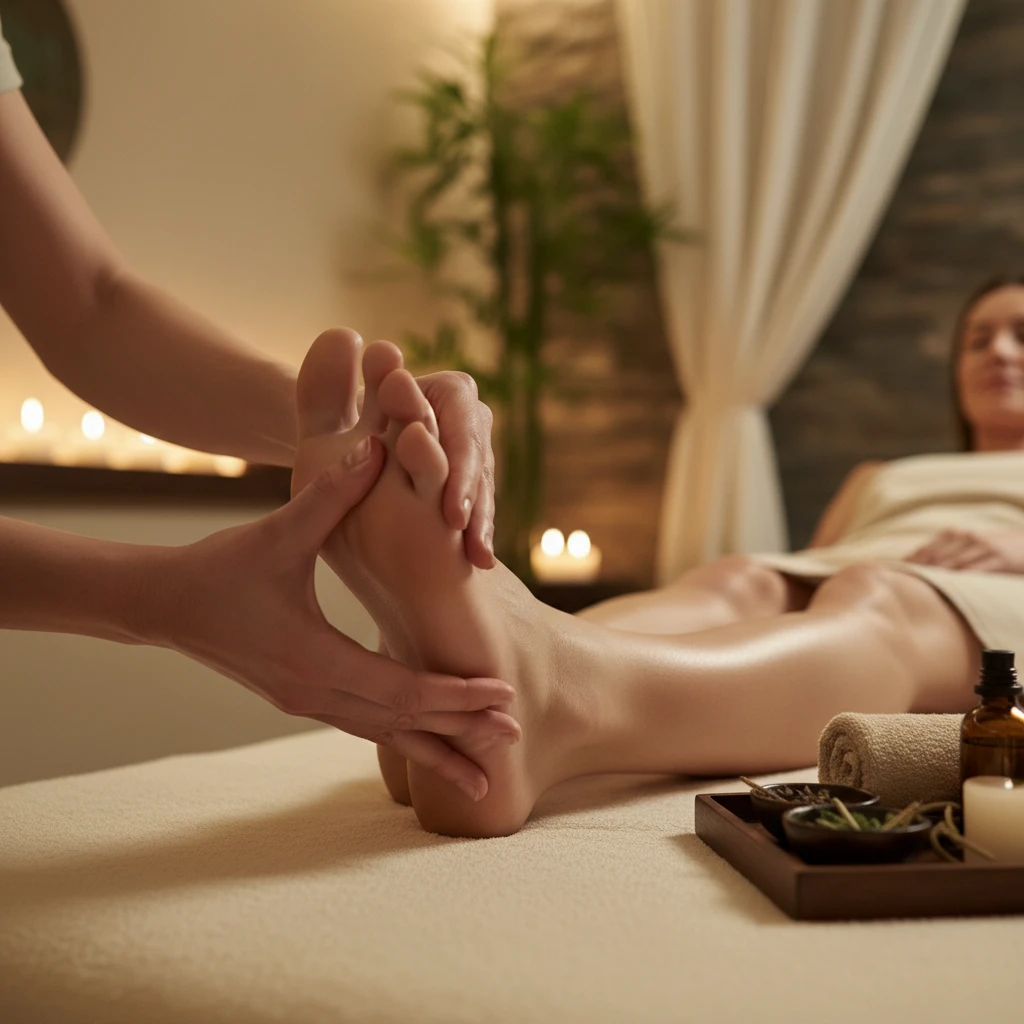
The Fallopian Tube and Lymphatic Drainage
Across the top of the foot, specifically the band running from ankle to ankle, lies the reflex for the fallopian tubes and lymphatic groin drainage. Swelling and fluid retention in the pelvic area can exacerbate cramps.
Technique: Use a gentle sweeping motion across the top of the foot, moving from the toes toward the ankle. This lymphatic drainage technique helps reduce pelvic congestion, thereby reducing the severity of cramps.
Solar Plexus for Tension Release
The solar plexus point is located in the center of the foot, just below the ball of the foot. It is the main switch for the nervous system. Pressing this point during a cramping episode can induce a deep breath and relax the abdominal muscles, reducing the intensity of the spasms.
Reducing PMS Mood Swings and Emotional Volatility
Premenstrual Syndrome (PMS) often manifests as irritability, anxiety, and depression in the luteal phase (the week before menstruation). This is linked to fluctuating levels of serotonin and dopamine as progesterone drops.
Brain and Head Reflexes
The tips of all ten toes correspond to the brain and sinuses. Working these points helps clear mental fog and stabilize mood. The thumb-walking technique across the tips of the toes can be incredibly grounding.
Adrenal Glands
The adrenal glands sit on top of the kidneys and produce cortisol and adrenaline. The reflex point is located near the solar plexus, deep in the arch of the foot. Overworked adrenals lead to “adrenal fatigue,” which worsens PMS. Calming this point helps lower stress levels, making emotional regulation easier during the pre-menstrual window.
Reflexology Protocols for Heavy Bleeding
Menorrhagia (heavy bleeding) requires a different approach. While reflexology is generally safe, vigorous stimulation of the uterus point during a heavy flow should be avoided, as it could potentially increase circulation to the area temporarily.
The “Sedating” Technique
Instead of active stimulation, use a sedating hold. Press the pituitary point firmly and hold without movement for 60 seconds. This signals the body to regulate hormone output. Similarly, hold the solar plexus point to calm the systemic response.
Secondary Points for Heavy Flow
Focus on the spleen reflex (left foot, outer edge) and the thyroid. In Traditional Chinese Medicine (TCM), the spleen is responsible for “holding the blood” in the vessels. Strengthening the spleen reflex is believed to help prevent excessive bleeding.
Safety, Science, and Best Practices
While reflexology is a powerful tool, it is essential to approach it with realistic expectations and safety in mind. It is a complementary therapy, not a replacement for medical treatment.
Scientific Backing
Research supports the efficacy of reflexology in women’s health. A study published by the National Institutes of Health (NIH) has indicated that reflexology can significantly reduce the intensity of premenstrual syndrome symptoms compared to placebo groups. The mechanism is attributed to the modulation of the autonomic nervous system, shifting the body away from stress responses that disrupt hormonal cycles.
When to See a Doctor
If you experience sudden severe pain, bleeding after menopause, or bleeding between periods, consult a healthcare provider immediately. Reflexology is excellent for functional irregularities, but structural issues like fibroids or endometriosis often require medical intervention alongside holistic support.
Frequency of Treatment
For cycle regulation, consistency is key. A typical protocol involves:
- Weekly sessions for the first two to three menstrual cycles.
- Maintenance sessions once a month, ideally scheduled in the week prior to the expected period to mitigate PMS and prepare the body for menstruation.

People Also Ask
Can reflexology induce a period?
Reflexology cannot “force” a period if the body is not physiologically ready, such as in the case of pregnancy. However, if a period is delayed due to stress or hormonal imbalance, stimulating the uterus and pituitary reflexes can lower cortisol and encourage the body to begin menstruation naturally.
Which foot is for the uterus in reflexology?
The uterus reflex is located on both feet. It is found on the inside of the foot, in the diagonal area between the inner ankle bone and the heel. The left foot corresponds to the left side of the uterus/pelvis, and the right foot to the right side.
How often should I do reflexology for irregular periods?
For best results, practice self-reflexology 2-3 times a week for 10-15 minutes. Professional treatments are recommended once a week for at least three cycles to establish a new rhythm, followed by monthly maintenance sessions.
Is reflexology safe during menstruation?
Yes, reflexology is safe during menstruation and can be very beneficial for relieving cramps and mood swings. However, if you have extremely heavy bleeding, avoid vigorous stimulation of the uterus reflex point and focus on the solar plexus for relaxation instead.
Can foot massage help with PCOS?
Yes, reflexology can be a supportive therapy for Polycystic Ovary Syndrome (PCOS). By targeting the endocrine system (pituitary, thyroid, ovaries) and the liver, reflexology aims to balance hormones and improve insulin sensitivity, which are key factors in managing PCOS.
What specific point stops menstrual cramps immediately?
While no single point works immediately for everyone, the most effective point for rapid relief is the uterus reflex (inner ankle) combined with the solar plexus point. Pressing the solar plexus helps relax the abdominal muscles, while the uterus point addresses the source of the cramping.