Reflexology for headaches is a holistic therapeutic practice that involves applying targeted pressure to specific reflex zones on the feet and hands which correspond directly to the head, neck, and nervous system. This non-invasive technique aims to alleviate pain, reduce vascular inflammation, and restore neurological balance by stimulating the body’s natural healing mechanisms.
Understanding the Foot-Brain Connection
In the realm of holistic health, the feet are often viewed as the foundation of physical well-being, acting as a microsystem of the entire human body. Reflexology operates on the principle of zone therapy, which posits that the body is divided into ten vertical zones running from the head to the toes. By manipulating specific areas within these zones, a reflexologist can influence the corresponding organs and systems located elsewhere in the body.
For individuals suffering from chronic headaches and migraines, this connection is particularly potent. The neurological pathways that transmit pain signals to the brain can be influenced by stimulating the dense network of nerve endings located in the feet. With over 7,000 nerve endings in each foot, these extremities act as a control panel for the central nervous system. When specific pressure is applied to the toes—which represent the head and neck area—it sends a calming signal through the peripheral nerves to the central nervous system, effectively interrupting the pain-spasm-pain cycle that characterizes chronic tension headaches and migraines.
Unlike standard massage, which manipulates soft tissue to relax muscles, reflexology focuses on specific points to stimulate a physiological response. It is not merely about relaxation; it is a targeted intervention designed to improve circulation, reduce neural inflammation, and rebalance the endocrine system, which is often a culprit in hormonal migraines.
Mapping the Nervous System: Key Reflex Points
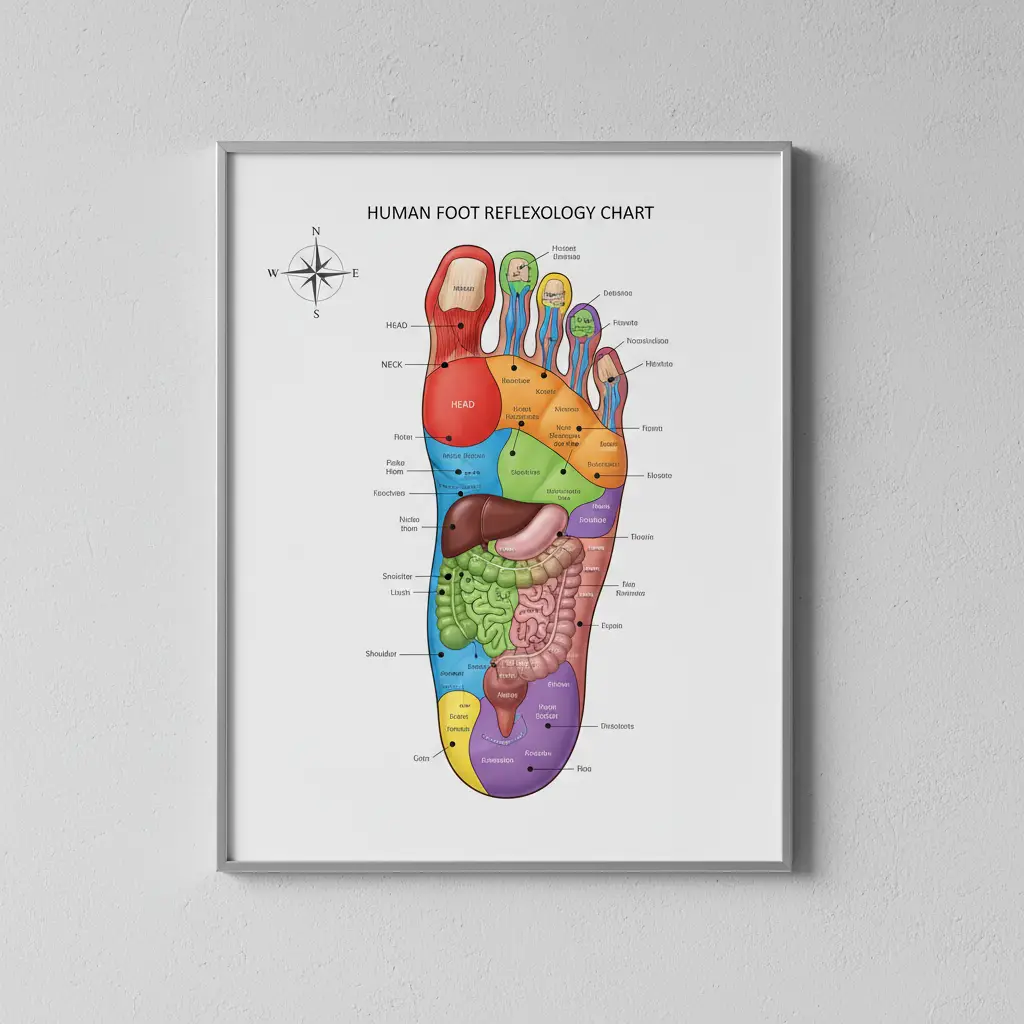
To effectively utilize reflexology for headaches, one must understand the geographical landscape of the foot. The mapping is logical and follows the anatomical structure of the body. For neurological relief, the focus is primarily on the toes and the medial aspect (inner edge) of the foot.
The Hallux (Big Toe): The Head Control Center
The big toe, or hallux, is the primary reflex area for the head and brain. The pad of the big toe corresponds to the brain itself, including the cerebrum and cerebellum. Stimulating this area is crucial for general headache relief and cognitive clarity. Located in the very center of the big toe pad is the reflex point for the pituitary gland. This is the “master gland” of the endocrine system. For migraines triggered by hormonal fluctuations, precise pressure on the pituitary point is essential.
The Neck Ridge
The base of the toes, where they join the foot, is known as the “neck line” or neck ridge. Tension headaches often originate from tightness in the cervical spine and trapezius muscles. By working across the base of the toes—particularly the big toe—you directly address the physical tension held in the neck. This area often feels “crunchy” or granular in people who suffer from chronic neck pain, a texture reflexologists refer to as crystal deposits.
The Spinal Reflex
Running along the medial side of the foot, from the side of the big toe down to the heel, lies the spinal reflex. This curve follows the natural arch of the foot. Working this area is vital for headaches caused by spinal misalignment or poor posture. By tracing the spine reflex, you help open up the neural pathways that travel from the spinal cord to the brain, facilitating better communication within the nervous system.
Targeted Protocols for Different Headache Types
Not all headaches are created equal. A tension headache requires a different reflexology approach than a sinus headache or a vascular migraine. Differentiating your technique based on the symptoms is the key to effective relief.
1. Tension Headaches
Tension headaches usually manifest as a dull, aching sensation wrapping around the head like a tight band. They are frequently caused by stress and musculoskeletal tightness.
- Technique: Focus heavily on the Neck Reflex (base of the big toe) and the Shoulder Reflex (located on the ball of the foot, just below the little toe).
- Action: Use a “thumb-walking” technique across the base of the toes. Apply firm pressure and inch your thumb across the skin like a caterpillar. Perform this 3-5 times on each foot. This helps release the trapezius muscles and reduce the mechanical tension pulling on the occipital ridge.
2. Migraines
Migraines are complex neurological events often involving vascular dilation and hormonal imbalances. They are typically unilateral (one-sided) and throbbing.
- Technique: Prioritize the Pituitary Gland (center of big toe) and the Temporal Area (side of the big toe). Also, address the Solar Plexus point to calm the nervous system.
- Action: Press and hold the pituitary point for 30 seconds, release, and repeat. This is a static pressure technique. Additionally, work the adrenal gland reflex (located near the middle of the foot arch) to manage cortisol levels and stress response.
3. Sinus Headaches
These present as pressure behind the eyes, cheeks, and forehead, often accompanied by congestion.
- Technique: The pads of all five toes represent the sinuses.
- Action: Apply a “rubbing” or circular friction motion to the fleshy pads of the toes (fingertips of the foot). This stimulates drainage and blood flow to the sinus cavities. The tips of the toes specifically correlate to the frontal sinuses.
Emergency Points for Acute Pain Relief
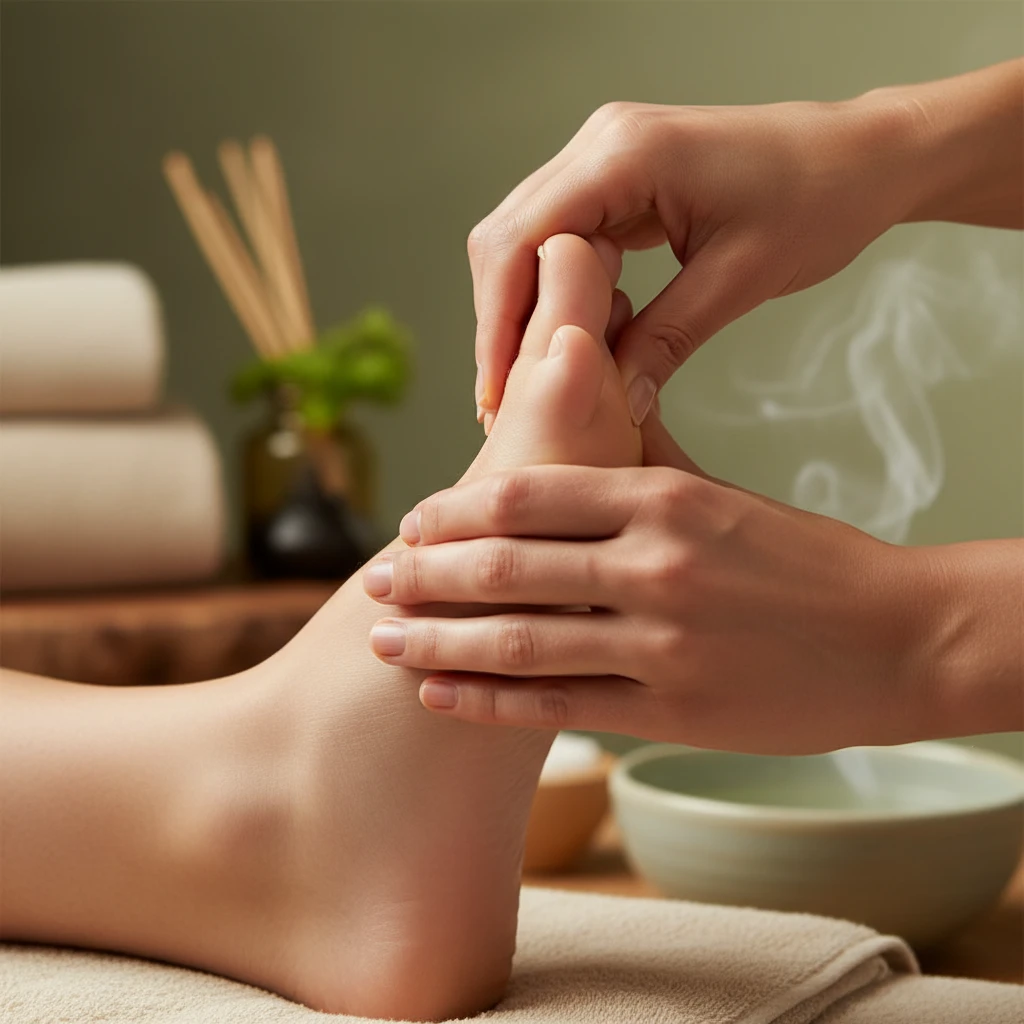
When a migraine strikes or acute pain becomes unbearable, a full session may not be feasible. In these moments, specific “emergency buttons” can be utilized to down-regulate the pain response immediately.
The Solar Plexus Point
Known as the “nerve switch,” the Solar Plexus point is perhaps the most profound point for relaxation. It is located in the center of the diaphragm line, just under the ball of the foot between the second and third toes.
To activate: Place your thumb on this point. Ask the recipient (or yourself) to inhale deeply. As they exhale, press firmly and lean into the point. Hold for 10-15 seconds. This signals the parasympathetic nervous system to engage, shifting the body from “fight or flight” (which exacerbates pain) to “rest and digest.”
The Large Intestine 4 (LI4) – Hand Reflexology
While this guide focuses on feet, the LI4 point on the hand is critical for emergency headache relief. Located in the webbing between the thumb and index finger, this point is famous for its analgesic properties. Applying pinching pressure here can provide rapid relief for frontal headaches. Note: This point is contraindicated during pregnancy.
The Physiology of Relief: How It Works
Skeptics often ask how rubbing a foot can cure a headache. The answer lies in the physiological mechanisms of the nervous system. The most prominent theory is the Gate Control Theory of Pain. This theory suggests that the spinal cord contains a neurological “gate” that either blocks pain signals or allows them to continue to the brain. Non-painful input (like the firm pressure of reflexology) closes the nerve “gates” to painful input, which prevents pain sensation from traveling to the central nervous system.
Furthermore, reflexology has been shown to improve blood flow. Migraines are often vascular in nature—initial constriction of blood vessels followed by rapid dilation. By normalizing circulation, reflexology can help stabilize these vascular changes. Research supported by institutions like the National Center for Complementary and Integrative Health (NCCIH) suggests that relaxation techniques, including reflexology, can significantly reduce the frequency of tension headaches and migraines by lowering overall physiological arousal.
Preventative Neurological Care & Routine
Treating a headache once it has started is reactive. The true power of reflexology lies in preventative care. Establishing a neurological maintenance routine can raise the threshold for pain triggers.
Daily Self-Care Routine
You do not need a professional therapist for daily maintenance. Spend 5 minutes every evening working on your feet:
- Warm-up: Rotate your ankles and squeeze the entire foot to increase blood flow.
- Toe Rotation: Gently rotate each big toe to loosen neck tension.
- Pituitary Press: Press the center of your big toes for 30 seconds.
- Spinal Flush: Run your thumb down the inside arch of your foot 10 times.
- Hydration: Drink a large glass of water immediately after. Reflexology releases toxins and metabolic waste; hydration is essential to flush these from your system to prevent a “detox headache.”
Grounding Techniques
In addition to manual manipulation, “earthing” or walking barefoot on natural surfaces (grass, sand) stimulates all reflex points simultaneously. This practice helps regulate cortisol and reduces the electromagnetic stress that can contribute to neurological sensitivity.
Safety Precautions and Contraindications
While reflexology is generally safe, it is a powerful modality that moves blood and lymph. There are specific instances where caution is required.
Thrombosis and DVT: If you have a history of Deep Vein Thrombosis (blood clots) in the legs, you must avoid vigorous foot reflexology, as it increases circulation and could theoretically dislodge a clot.
Acute Foot Injuries: If you have fractures, open wounds, or severe gout in the foot, rely on hand reflexology instead. The reflex points in the hands mirror those in the feet and offer a viable alternative.
Pregnancy: Specific points, particularly around the ankles (uterus/ovary reflex) and the LI4 point on the hand, can stimulate uterine contractions. Always consult a certified prenatal reflexologist before attempting treatment during pregnancy.

By integrating reflexology into your wellness strategy, you move beyond symptom suppression and toward addressing the root causes of neurological distress. Whether dealing with the sharp stab of a migraine or the dull vice of a tension headache, the path to relief may very well lie at your feet.
Frequently Asked Questions
Can reflexology get rid of a migraine immediately?
While reflexology can significantly reduce the intensity of a migraine and shorten its duration by activating the parasympathetic nervous system, it may not eliminate it instantly. It is most effective when used at the very onset of symptoms (the prodrome phase) or as a preventative measure.
Where do you press on your foot for a headache?
For general headaches, press on the pad of the big toe (which corresponds to the brain) and the base of the toes (which corresponds to the neck). For sinus headaches, focus on the pads of the smaller toes.
How long does it take for reflexology to work for headaches?
Many people experience relief within 10 to 15 minutes of a session as the body enters a state of deep relaxation. However, for chronic conditions, consistent sessions over 4 to 6 weeks are often recommended to see long-term changes in headache frequency.
Is reflexology safe for everyone?
Reflexology is generally safe, but it should be avoided or modified for individuals with foot fractures, active gout, deep vein thrombosis (DVT), or severe circulation issues. Pregnant women should consult a specialist, as some points can stimulate contractions.
What is the difference between acupressure and reflexology?
Reflexology relies on the theory of “zone therapy,” mapping the entire body to the feet and hands. Acupressure is based on Traditional Chinese Medicine (TCM) and focuses on energy meridians that run throughout the entire body. While they share similarities, their mapping systems differ.
Can I do reflexology on myself?
Yes, self-reflexology is highly effective. Because the feet are accessible, you can easily apply pressure to the big toe and spinal reflex points. Hand reflexology is also a convenient alternative for self-treatment throughout the day.