Foot reflexology for posture is a holistic therapeutic practice that involves applying targeted pressure to specific zones on the feet—primarily along the medial arch—that correspond to the spine and pelvic girdle. By stimulating these reflex points, practitioners aim to release fascial tension, correct neuromuscular imbalances, and align the body’s kinetic chain from the ground up.
The Foundation of Alignment: How Feet Influence the Spine
The human body functions as a complex, interconnected kinetic chain. This means that movement or misalignment in one part of the body inevitably affects other areas. As the primary interface between the body and the ground, the feet serve as the foundation for this entire structure. When the foundation is unstable, the structure above it—the ankles, knees, hips, and spine—must compensate to maintain balance.
Structural integrity begins with the three arches of the foot: the medial longitudinal arch, the lateral longitudinal arch, and the transverse arch. These arches act as shock absorbers and weight distributors. When these arches collapse (flat feet) or become too rigid (high arches), the body’s center of gravity shifts.
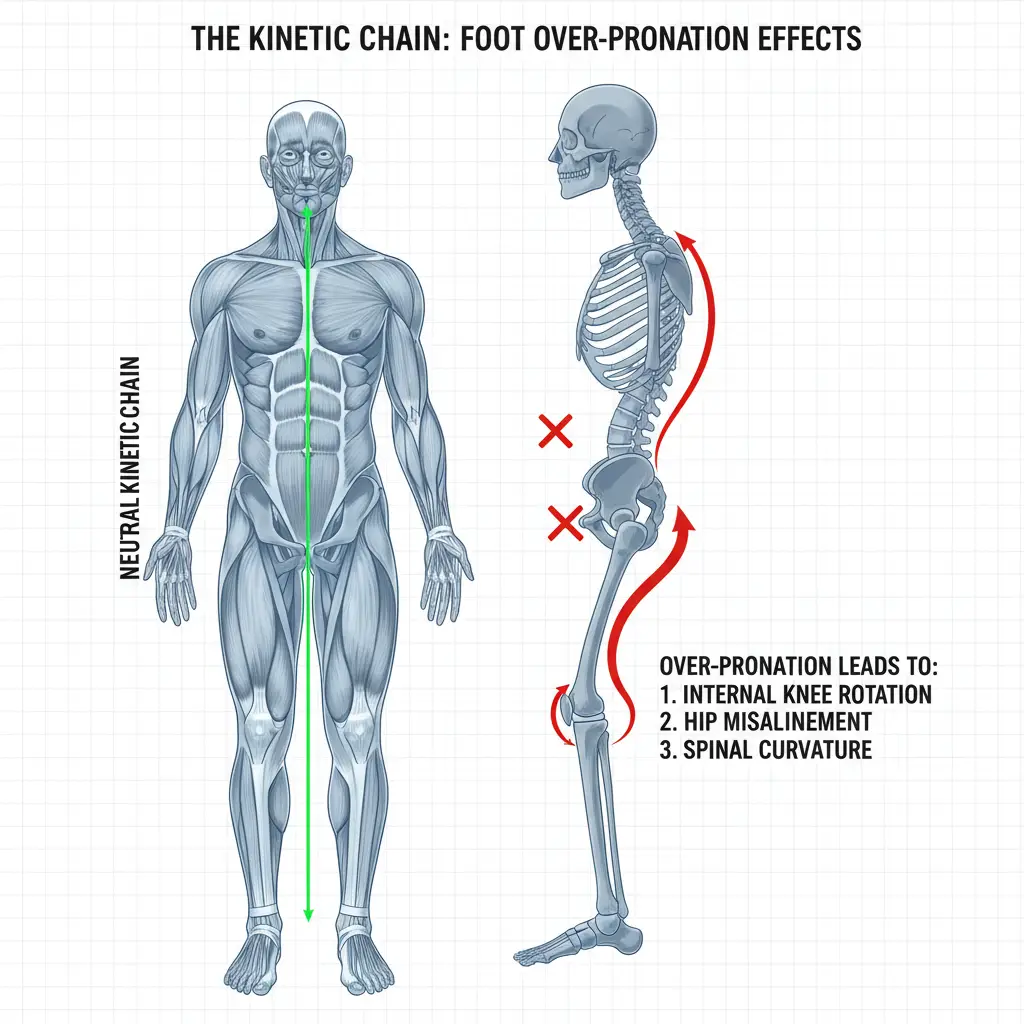
For instance, over-pronation (where the feet roll inward) often leads to internal rotation of the tibia and femur. This rotation tilts the pelvis anteriorly, increasing the curvature of the lower back (lordosis) and forcing the thoracic spine into a rounded position (kyphosis) to compensate. This chain reaction highlights why treating back pain or poor posture solely at the level of the spine is often insufficient. To achieve lasting correction, one must address the root cause: the alignment of the feet.
According to research in biomechanics, sensory input from the plantar surface of the foot is crucial for postural stability. The somatosensory system relies on receptors in the feet to inform the brain about body position relative to the ground. Reflexology enhances this sensory feedback, improving proprioception and allowing the body to naturally self-correct its alignment.
Mapping the Spine: Foot Reflexology for Posture
Reflexology is based on the premise that the foot is a microcosm of the entire body. In the context of posture, the most critical zone is the spinal reflex. This reflex area is located along the medial aspect (the inner edge) of each foot, following the curve of the bone structure from the toe to the heel.
The Cervical Spine (Neck)
The reflex points for the cervical spine are located on the medial aspect of the big toe, specifically the proximal phalanx. Tension in this area of the foot often correlates with “tech neck” or forward head posture. By massaging the base of the big toe, individuals can encourage the release of tension in the suboccipital muscles and cervical vertebrae, promoting a more neutral head position.
The Thoracic Spine (Upper Back)
Moving down from the big toe, the ball of the foot (specifically the medial side of the first metatarsal) corresponds to the thoracic spine. This area is often associated with the chest and lungs. Poor posture usually involves a collapsed chest and rounded shoulders. Stimulating this reflex zone helps open the energetic pathways to the thoracic cavity, encouraging deeper breathing and an upright stance.
The Lumbar Spine (Lower Back)
The arch of the foot represents the lumbar spine. This is the area most prone to stress in modern humans due to prolonged sitting and weak core muscles. The shape of the foot’s arch mimics the natural curve of the lower back. A collapsed foot arch often mirrors a compromised lumbar curve. Reflexology work here is intense and focused, aiming to stimulate the nerves that feed the lower back muscles, encouraging the spine to regain its natural lordotic curve. This can be particularly beneficial as supportive therapy for herniated discs and other lumbar spinal issues.
The Sacrum and Coccyx
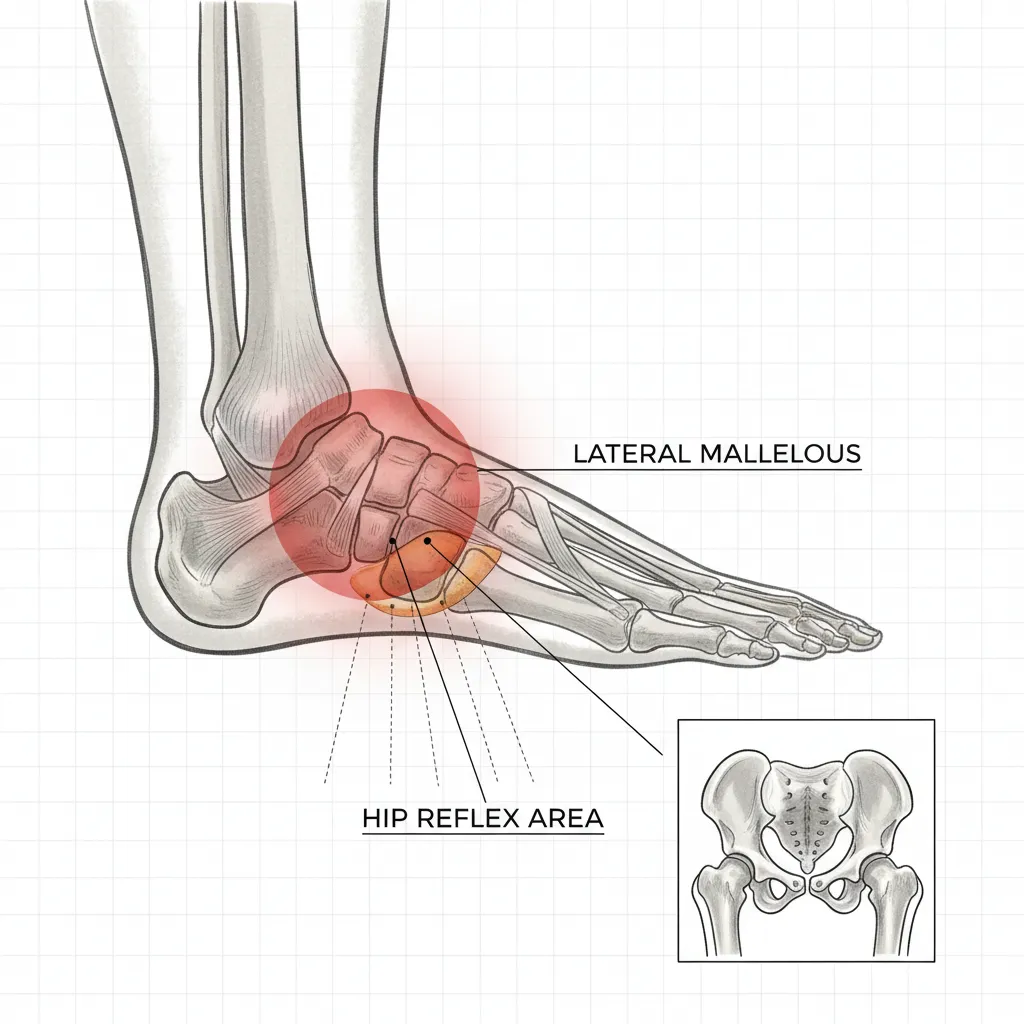
Finally, the heel represents the pelvic girdle, sacrum, and coccyx. The heel bone (calcaneus) provides the anchor for the spinal line. Deep pressure around the rim of the heel can help alleviate sciatic pain and correct pelvic tilts that contribute to uneven shoulder height and spinal curvature.
Reflex Points for Core Stability and Pelvic Balance
While the spinal line is the primary target, correcting posture requires more than just spinal alignment; it requires core stability. In reflexology, specific points help engage the body’s internal support system.
The Solar Plexus Point
Located in the center of the foot, just below the ball of the foot (metatarsal heads), lies the solar plexus point. This point is pivotal for stress relief and diaphragmatic function. The diaphragm is a key postural muscle. When we are stressed, we tend to take shallow breaths, tightening the accessory breathing muscles in the neck and shoulders, leading to slouching. Pressing the solar plexus point encourages deep, belly breathing, which naturally expands the rib cage and straightens the spine.
The Sciatic Nerve Reflex
Running across the heel, the sciatic nerve reflex is essential for those who suffer from lower crossed syndrome (tight hip flexors and weak glutes). Stimulation of this band can help release tension in the gluteal muscles and piriformis, allowing the pelvis to settle into a neutral position. A neutral pelvis is the cornerstone of good posture; without it, the spine cannot stack correctly.
Balancing Weight Distribution and Proprioception
Posture is dynamic, not static. It requires the constant micro-adjustment of muscles to fight gravity. This ability depends heavily on weight distribution across the foot. Ideally, weight should be distributed between the heel, the first metatarsal head (big toe joint), and the fifth metatarsal head (little toe joint)—the “foot tripod.”
Many individuals unconsciously shift their weight to their heels or toes, throwing the body off balance. Reflexology improves the sensitivity of the plantar nerves, enhancing proprioception (body awareness). When the feet are “awake” and sensitive, the brain receives clearer signals about where the weight is falling.
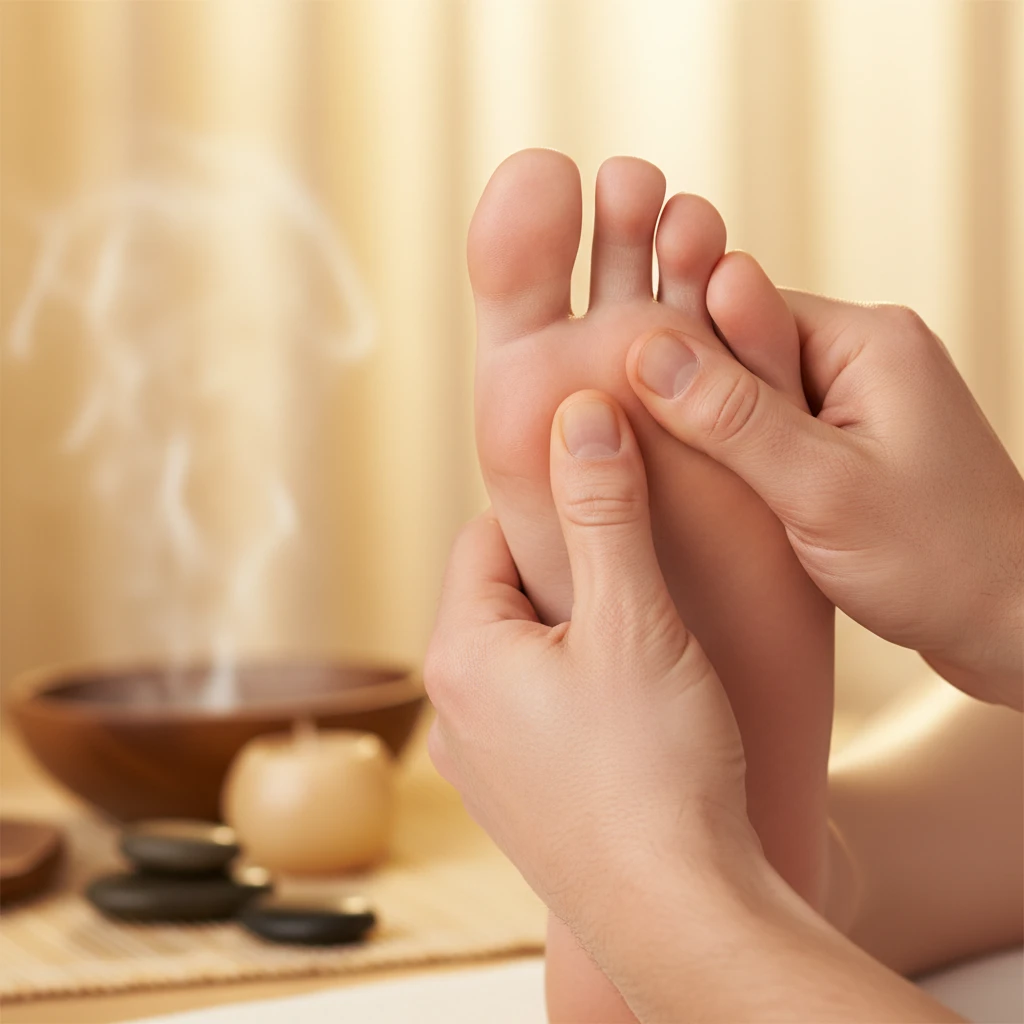
Techniques such as thumb-walking along the diaphragm line and knuckle-kneading the plantar fascia help break up adhesions that desensitize the feet. As these adhesions dissolve, the foot becomes more pliable and better able to spread out, increasing the surface area for balance. This groundedness translates upward, allowing the knees to unlock and the spine to lengthen.
Exercises to Strengthen Foot Muscles and Arches
While reflexology provides the neurological stimulus for correction, physical exercises are required to build the muscular endurance necessary to hold that correction. Integrating foot strengthening exercises with reflexology creates a powerful synergy for postural health.
1. The Short Foot Exercise (Janda’s Short Foot)
This is the gold standard for correcting flat feet and improving postural stability.
- How to do it: Sit or stand with feet flat on the floor. Without curling your toes, attempt to shorten your foot by pulling the ball of the big toe toward the heel. This action lifts the medial arch.
- The Goal: You should feel the muscles deep in the arch contracting. Hold for 5-10 seconds and release. This trains the intrinsic foot muscles to support the arch, preventing the inward collapse that misaligns the knees and hips.
2. Toe Splaying and Gripping
Modern footwear often compresses the toes, deactivating the muscles responsible for balance.
- How to do it: Sit with feet flat. Lift all toes off the ground and spread them as wide as possible. Then, place the little toe down first, followed by the fourth, third, second, and finally the big toe.
- The Goal: This improves dexterity and widens the forefoot base, providing a more stable platform for the column of the body.
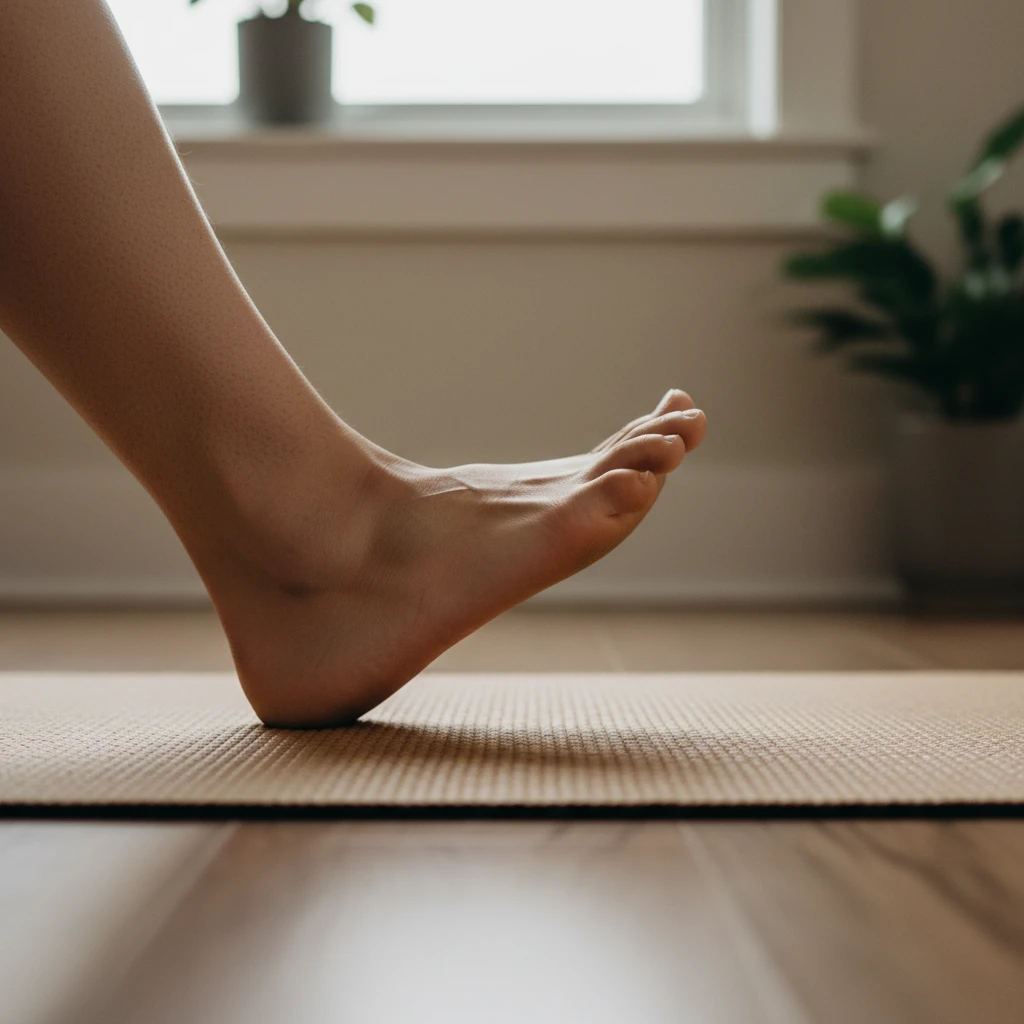
3. Calf Raises with Tennis Ball
This exercise targets the posterior tibial tendon, which supports the arch.
- How to do it: Place a tennis ball between your heels. Squeeze the ball with your heels while rising up onto your toes. Lower slowly.
- The Goal: Keeping the ball in place forces the ankles to align properly, preventing them from rolling outward (supination) or inward (pronation) during movement.
Integrating Foot Reflexology into Your Routine
Correcting posture through foot alignment is not an overnight fix; it is a process of re-education for the nervous and musculoskeletal systems. To see results, consistency is key.
Daily Protocol:
- Morning: perform 2 minutes of toe splaying to wake up the feet before stepping out of bed.
- Mid-day: Use a reflexology ball or golf ball under your desk. Roll it under the arch of the foot for 5 minutes per foot. This prevents the plantar fascia from tightening up during long periods of sitting.
- Evening: Dedicate 10 minutes to manual reflexology. Focus on the spinal line along the medial arch. Use a rich lotion or oil to allow your thumbs to glide smoothly. Pay special attention to any “crunchy” spots (crystal deposits), as these indicate areas of congestion in the corresponding spinal area.
By treating the feet as the foundation of your health, you address posture at its source. Foot reflexology for posture offers a non-invasive, relaxing, and highly effective method for realigning the spine, reducing back pain, and standing taller with ease.
People Also Ask
Can reflexology actually straighten your spine?
While reflexology cannot structurally manipulate bone like surgery, it can significantly improve spinal alignment. By releasing tension in the muscles supporting the spine and improving proprioception, reflexology allows the body to return to a more natural, neutral posture, reducing curvature caused by muscle imbalances.
Which part of the foot represents the back in reflexology?
The spine is mapped along the medial aspect (inner edge) of the foot. The curve follows the bone structure: the base of the big toe represents the neck (cervical spine), the ball of the foot represents the upper back (thoracic), the arch represents the lower back (lumbar), and the heel represents the sacrum and coccyx.
How do flat feet affect overall body posture?
Flat feet (fallen arches) cause over-pronation, where the feet roll inward. This triggers a chain reaction: the knees rotate inward, the pelvis tilts forward, and the lower back curvature increases (lordosis). This misalignment often leads to back pain and poor posture.
Can foot massage help with slouching?
Yes. Slouching is often a result of tight chest muscles and a weak back. Foot massage targeting the thoracic spine reflex (ball of the foot) and the solar plexus point can promote relaxation, deeper breathing, and a release of tension in the upper body, making it easier to maintain an upright posture.
What are the best foot exercises for improving posture?
The “Short Foot” exercise is highly effective for lifting the arches and engaging core stability. Additionally, toe splaying, towel scrunches, and calf raises with proper alignment help strengthen the intrinsic foot muscles that provide the foundation for good posture.
How often should I do reflexology for back pain and posture?
For chronic postural issues or back pain, practicing self-reflexology daily for 10-15 minutes is recommended. Professional sessions can be beneficial once a week or bi-weekly to address deeper imbalances and guide your self-care routine.