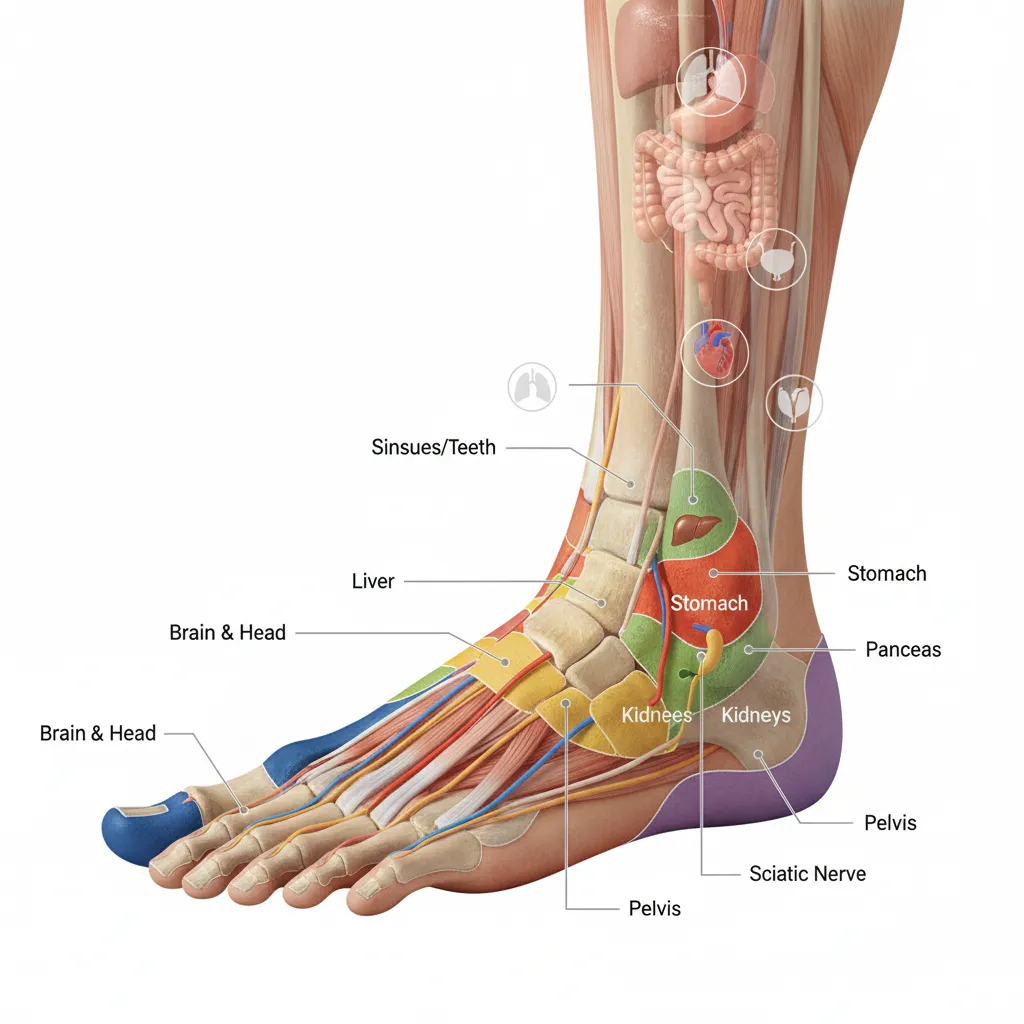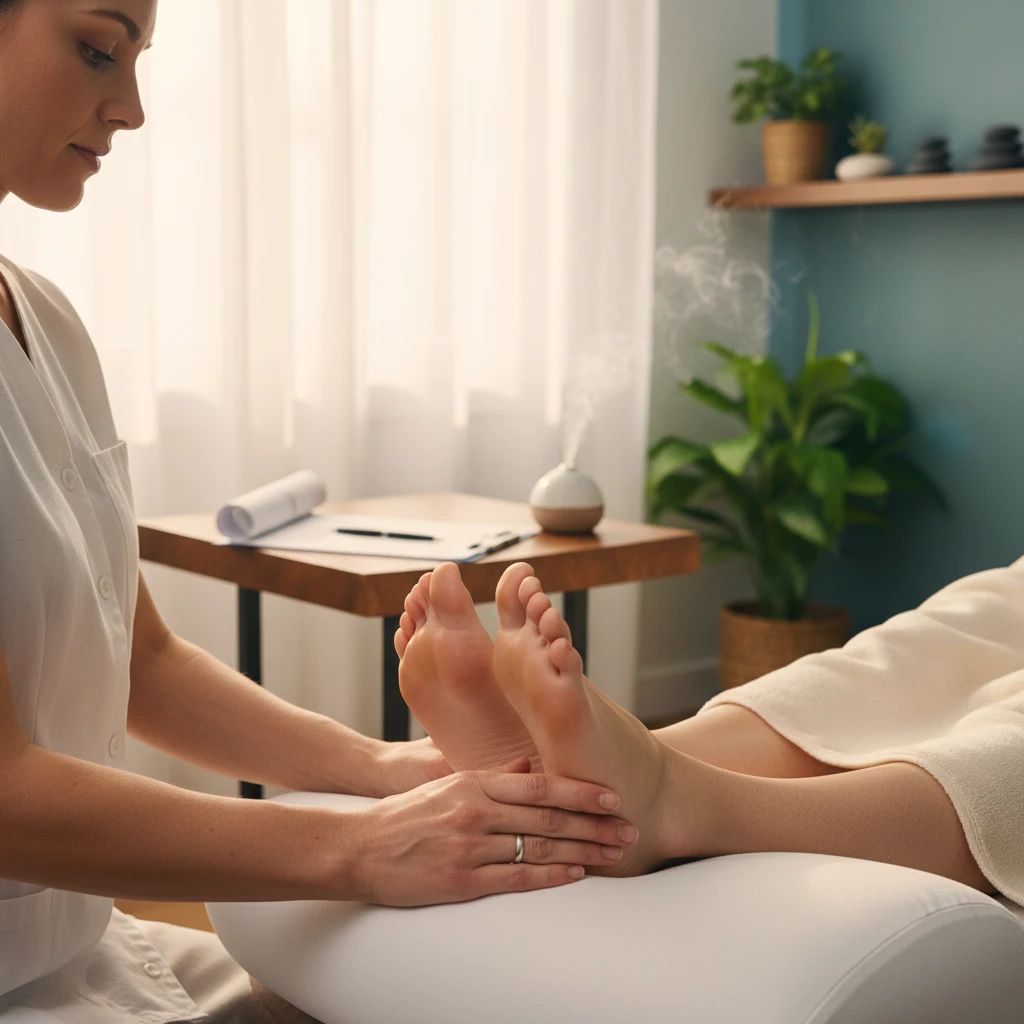
When exploring complementary therapies for well-being, Auckland residents often encounter reflexology and acupuncture. The key differences between reflexology and acupuncture lie in their ancient origins, therapeutic tools, and the specific body areas targeted, though both aim to restore the body’s natural balance and promote self-healing. Understanding these distinctions is crucial for making an informed choice that best suits your health goals.
Origins and Fundamental Principles of Each Therapy
Both reflexology and acupuncture are time-honoured therapeutic practices with deep historical roots, yet they emerged from distinct cultural and theoretical frameworks. Understanding their foundational principles is essential for appreciating their unique approaches to health and healing.
The Roots and Philosophy of Reflexology
Reflexology is a non-invasive complementary therapy believed to have origins dating back to ancient Egypt, China, and even Native American cultures. Modern reflexology, however, largely developed in the early 20th century, notably pioneered by Dr. William Fitzgerald’s ‘Zone Therapy’ and refined by Eunice Ingham, who charted the reflex points on the feet, hands, and ears corresponding to various organs, glands, and parts of the body.
The fundamental principle of reflexology posits that specific points on the feet, hands, and outer ears are interconnected with all other areas of the body through energy pathways or nerve endings. When these reflex points are stimulated through precise pressure techniques, it is believed to encourage the body’s natural healing processes, improve circulation, reduce tension, and restore balance. Reflexologists work with the premise that blockages in these pathways can lead to illness or discomfort, and by stimulating the corresponding reflex points, these blockages can be cleared, allowing energy to flow freely and promoting overall well-being. The therapy is deeply rooted in the concept of relaxation, allowing the body to enter a state conducive to self-repair.
The Ancient Science and Art of Acupuncture
Acupuncture is an integral component of Traditional Chinese Medicine (TCM), a comprehensive medical system that has been practiced for over 2,500 years. Its theoretical framework is vastly different from Western medicine, focusing on the concept of ‘Qi’ (pronounced ‘chee’), which is often translated as vital life energy or life force. According to TCM, Qi flows through specific pathways in the body called ‘meridians’ or ‘channels.’ There are 12 primary meridians corresponding to the major organs, and numerous secondary channels.
The central principle of acupuncture is that health is maintained when Qi flows smoothly and is balanced throughout these meridians. Illness or pain arises when the flow of Qi becomes disrupted, blocked, or unbalanced (an imbalance of Yin and Yang). Acupuncturists insert extremely fine, sterile needles into specific points along these meridians – known as acupoints – to restore the harmonious flow of Qi. This stimulation aims to rebalance the body’s energy, alleviate pain, and activate its inherent healing capabilities. The choice of acupoints is highly individualised, based on a thorough diagnosis of the patient’s overall health, symptoms, pulse, and tongue. More information on TCM can be found on authoritative sources like the World Health Organization’s page on Traditional Chinese Medicine.
Similarities and Key Differences in Approach and Tools
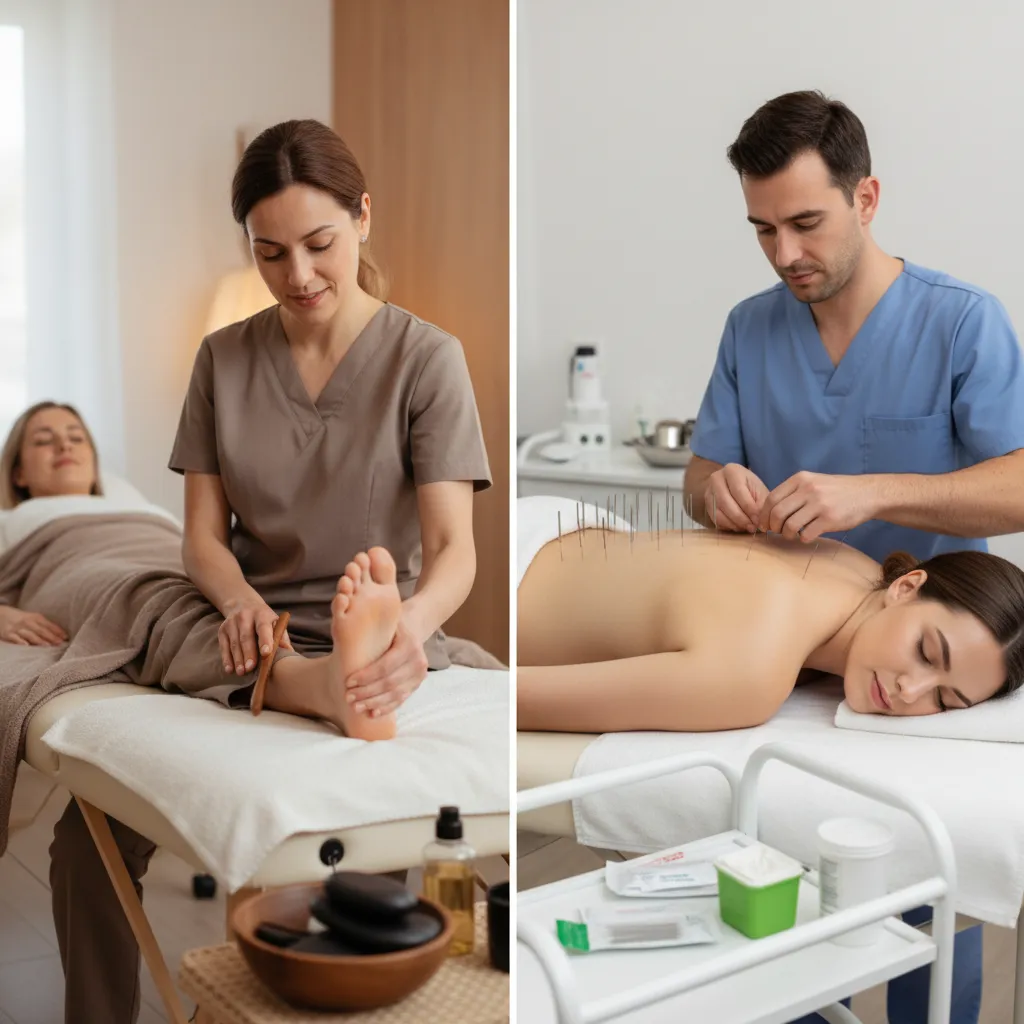
While both reflexology and acupuncture share the overarching goal of restoring balance and promoting the body’s natural healing abilities, their methodologies, the tools they employ, and the specific areas of the body they target diverge significantly.
Shared Philosophy: Holistic Healing and Energy Flow
Despite their distinct origins, reflexology and acupuncture share several philosophical commonalities. Both are considered holistic therapies, meaning they treat the individual as a whole, rather than focusing solely on isolated symptoms. They acknowledge an intricate connection between the physical, mental, and emotional aspects of health. A core tenet in both practices is the belief in an underlying energy or life force within the body (Qi in acupuncture, and often referred to as energy or nerve impulses in reflexology) that, when balanced and flowing freely, contributes to optimal health. Both therapies aim to unblock these pathways and stimulate the body’s innate capacity for self-repair and well-being, making them valuable complementary approaches to modern medicine.
Distinct Methodologies and Tools
The most striking differences between reflexology and acupuncture lie in their practical application:
- Tools of Practice:
Reflexology exclusively uses the hands, fingers, and thumbs of the practitioner to apply varying degrees of pressure to specific reflex points. No external instruments or substances are used, making it entirely non-invasive. The primary ‘tool’ is skilled touch.
Acupuncture, conversely, relies on the insertion of extremely fine, sterile, single-use needles into precise acupoints on the body. These needles are typically made of stainless steel and are much thinner than hypodermic needles, often resulting in minimal to no discomfort upon insertion. Other techniques, such as moxibustion (burning mugwort near the skin), cupping, or electro-acupuncture, may also be incorporated. - Target Areas:
Reflexology primarily focuses on the feet, hands, and outer ears. These extremities are considered ‘maps’ or ‘microsystems’ of the entire body, with each point corresponding to a specific organ or body part. The treatment is confined to these areas.
Acupuncture targets points located all over the body, along the meridian pathways. These points can be found on the torso, limbs, head, and back. The selection of points is highly specific to the condition being treated and the individual’s overall energetic pattern. - Underlying Theory:
Reflexology’s theoretical basis often references nerve pathways, zone therapy, and physiological responses, suggesting that pressure stimulates nerve endings, leading to effects in corresponding body parts. It’s often viewed through a lens of promoting circulation and relaxation to facilitate natural healing.
Acupuncture is deeply rooted in the principles of Traditional Chinese Medicine (TCM), specifically the concept of Qi (life energy) and its flow through meridians. The goal is to correct imbalances in Qi, restore its smooth flow, and balance Yin and Yang. - Invasiveness:
Reflexology is completely non-invasive. It involves external pressure application on the skin, making it a comfortable option for those who are sensitive or averse to needles.
Acupuncture is minimally invasive due to the insertion of needles through the skin. While the needles are fine and often cause little sensation, it is an important distinction for many individuals.
Conditions Commonly Treated by Each Modality
While both reflexology and acupuncture are sought after for their therapeutic benefits, they tend to be more commonly associated with the treatment of certain conditions, reflecting their distinct mechanisms of action and traditional applications.
Reflexology: Targeting Stress, Pain, and General Well-being
Reflexology is widely recognised for its profound ability to induce relaxation and reduce stress. Many clients in Auckland seek reflexology for conditions that are often exacerbated by stress and tension. Common ailments and goals addressed by reflexology include:
- Stress and Anxiety: Its calming effect on the nervous system makes it excellent for managing general stress, anxiety, and promoting mental relaxation.
- Pain Management: Often used for Understanding Reflexology: A Comprehensive Guide