Reflexology for back pain is a specialized therapeutic modality that involves applying targeted pressure to specific reflex points on the feet, hands, or ears that correspond directly to the spinal column. By stimulating these neural pathways, practitioners aim to reduce systemic inflammation, interrupt pain signals, and promote structural alignment within the lumbar, thoracic, and cervical regions of the back.
The Science of Orthopedic Reflexology
Orthopedic reflexology elevates the standard practice of foot therapy by focusing intently on the structural and musculoskeletal systems. Unlike a general relaxation massage, this discipline is rooted in the premise that the body is represented on the feet through a series of “zones.” These zones are believed to be connected via the nervous system and energy meridians to specific organs, glands, and, most crucially for this discussion, the skeletal structure.
The mechanism of action relies heavily on the connection between the peripheral nervous system and the central nervous system (CNS). The feet are densely packed with approximately 7,000 nerve endings. When specific pressure techniques—such as thumb-walking or pivoting—are applied to the medial aspect of the foot (the inner arch), it stimulates the nerves corresponding to the spine. This stimulation sends a signal through the somatic nervous system to the brain, which then relays a response to the corresponding area of the back to relax muscles, improve circulation, and release endorphins.
Research suggests that reflexology can significantly lower cortisol levels and increase blood flow. According to the National Center for Complementary and Integrative Health (NCCIH), reflexology may be effective in reducing pain and psychological distress, making it a viable complementary therapy for orthopedic issues. By reducing the stress response, the body is better positioned to heal micro-tears in the muscle tissue and reduce the inflammation associated with chronic back pain.
Mapping the Spine: The Foot-Back Connection
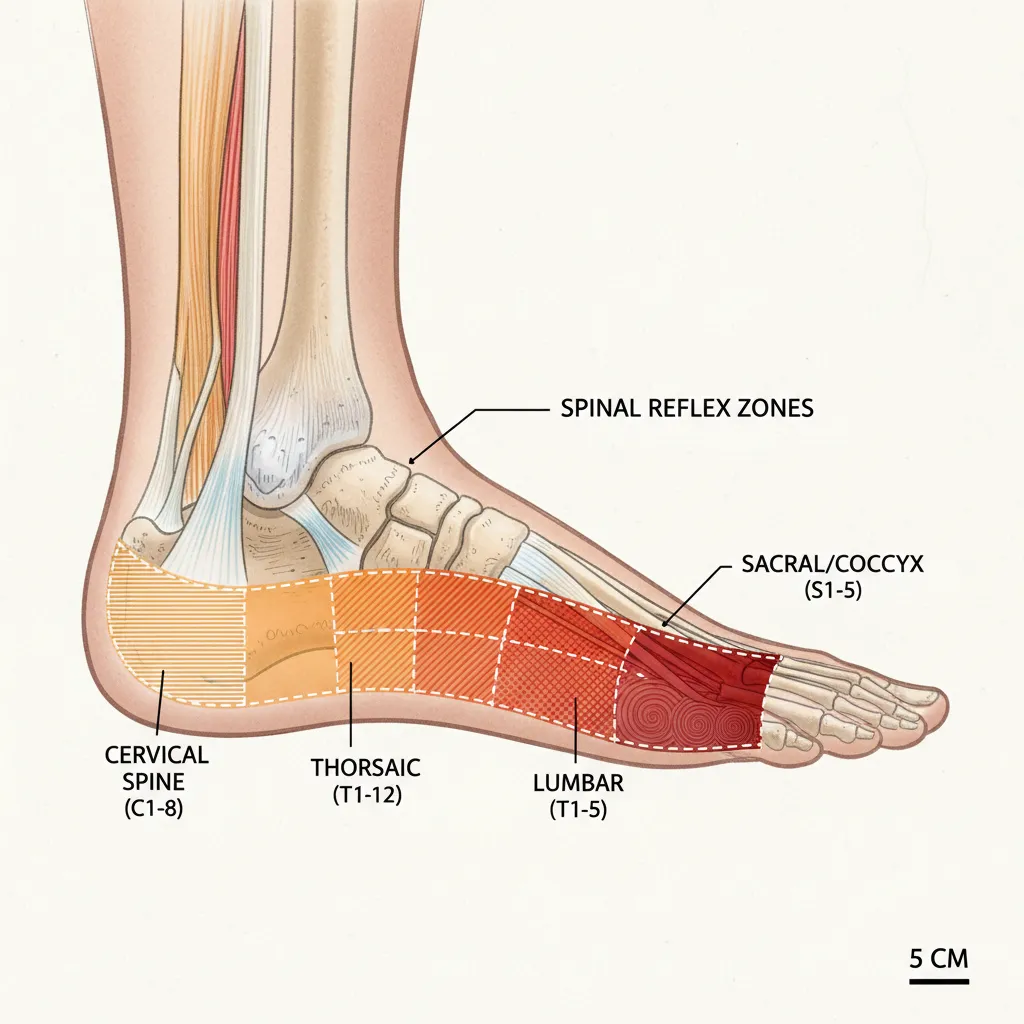
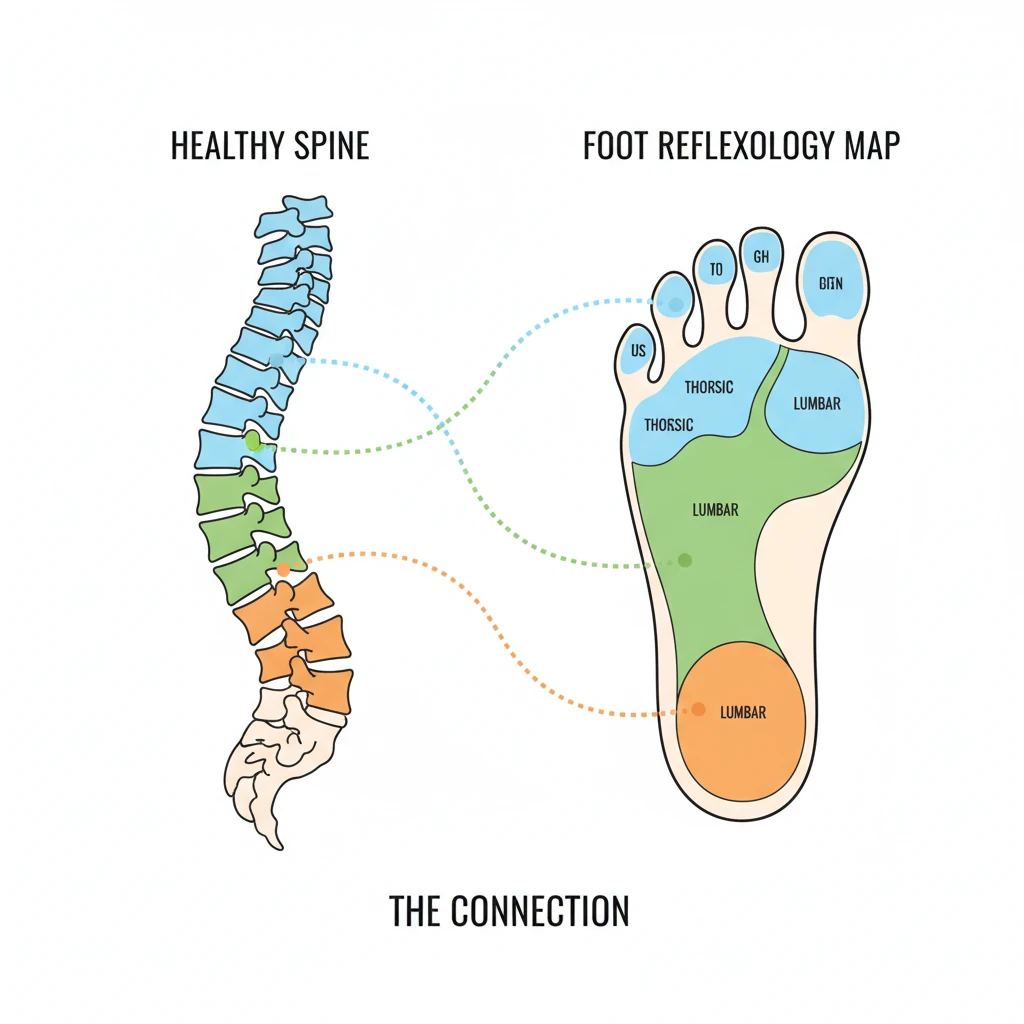
To master reflexology for back pain, one must understand the cartography of the foot. The human body is projected onto the feet in a logical arrangement. The spine, which acts as the central pillar of the body, runs along the medial line of the foot—the inside edge extending from the big toe to the heel.
This “spinal line” is the most critical area for treating orthopedic back issues. The curvature of the foot’s inner arch mimics the natural curvature of the human spine. This is not merely a coincidence in reflexology theory; it is the roadmap for treatment. If you trace your finger from the base of the big toe down to the heel bone, you are effectively tracing the spine from the atlas vertebrae down to the coccyx.
Practitioners look for “crystal deposits” or “crunchy” textures along this line. These deposits are believed to be accumulations of uric acid or calcium, indicating congestion or blockages in the corresponding area of the back. Breaking down these deposits through massage helps restore energy flow and nerve function.
Targeting Specific Zones: Lumbar, Thoracic, and Cervical
Effective treatment requires precision. Generalized rubbing of the foot may provide temporary relaxation, but orthopedic reflexology demands targeting specific vertebrae and muscle groups.
The Cervical Spine (Neck)
The cervical spine reflex area is located on the proximal phalanx of the big toe (the base of the toe where it joins the foot). Tension in the neck, often caused by “tech neck” or poor sleeping posture, can be alleviated by working this area. Techniques involve small, circular movements and thumb-walking around the base of the toe to release tension in the C1-C7 vertebrae.
The Thoracic Spine (Upper & Middle Back)
Moving down from the base of the big toe, the long bone of the inner foot (the first metatarsal) corresponds to the thoracic spine. This is the longest section of the spinal reflex zone. Pain in the upper back, often between the shoulder blades, is addressed here. Practitioners apply pressure along the bony ridge of the metatarsal. This area is often sensitive in individuals with desk jobs who suffer from kyphosis (rounding of the upper back).
The Lumbar Spine (Lower Back)
The lumbar reflex is found in the “waist” of the foot—the highest point of the arch where the cuneiform and navicular bones meet. This is the most common area of complaint. Lower back pain, often resulting from heavy lifting, weak core muscles, or prolonged sitting, corresponds to this zone. Deep, slow pressure is required here, as the structures in the lower back are dense and load-bearing.
The Sacrum and Coccyx (Tailbone)
Finally, the spinal line terminates at the heel. The area where the arch descends into the calcaneus (heel bone) represents the sacrum and coccyx. This area is crucial for treating sciatica and pelvic misalignment. Because the heel skin is thicker, more robust pressure or the use of knuckles may be necessary to stimulate the reflex.
Reflexology vs. Traditional Massage for Orthopedics
While both massage therapy and reflexology can alleviate back pain, their approaches and mechanisms differ significantly. Understanding these differences is vital for choosing the right modality for your specific orthopedic needs.
Traditional Swedish or Deep Tissue Massage focuses on the manipulation of soft tissue (muscles, tendons, and ligaments). A massage therapist works directly on the back, kneading knots and physically stretching muscle fibers to increase blood flow and break up adhesions. This is a “outside-in” approach.
Reflexology, conversely, works from the “inside-out.” It does not touch the injured back directly. This makes it an excellent option for patients who are in too much pain to be touched on their back (such as during an acute flare-up of a herniated disc). Reflexology stimulates the nervous system to encourage the body’s self-healing mechanisms. It addresses not just the muscles, but the systemic imbalances contributing to the pain.
Furthermore, reflexology is often more accessible. It requires only the removal of shoes and socks, making it a convenient option for mid-day treatments without the need for oils or disrobing.
Treatment Plans for Chronic Back Conditions
For chronic orthopedic conditions, a single session is rarely sufficient. A structured treatment plan is necessary to retrain the nervous system and achieve lasting relief.
Sciatica Protocols
Sciatica is characterized by pain radiating along the sciatic nerve, running down one or both legs from the lower back. In reflexology, the “sciatic nerve loop” is a specific zone located across the heel and around the ankle bone. A treatment plan for sciatica typically involves:
- Frequency: Twice weekly for the first 3 weeks, tapering to once weekly as inflammation subsides.
- Focus: Intense work on the heel (sacrum) and the indented band running across the ankle.
- Goal: Decompress the nerve root and relax the piriformis muscle via distal stimulation.
Herniated Discs
For herniated or bulging discs, the goal is to reduce inflammation and muscle guarding surrounding the injury. Direct massage on a herniated disc is contraindicated, making reflexology a superior choice.
- Frequency: Once weekly for 6-8 weeks.
- Focus: Gentle, rhythmic stimulation of the entire spinal line to encourage cerebrospinal fluid flow and reduce nerve impingement.
- Goal: Pain management without aggravating the injury site.
Scoliosis Management
While reflexology cannot straighten a curved spine, it can significantly manage the muscular imbalances and pain associated with scoliosis.
- Frequency: Ongoing maintenance (bi-weekly).
- Focus: Balancing the spinal reflexes on both feet to encourage equilibrium in the paraspinal muscles.
- Goal: Reducing muscular fatigue and compensatory tension patterns.
A Step-by-Step Self-Care Routine
While professional treatment is recommended, self-reflexology can provide daily maintenance and acute pain relief. Follow this routine for 10-15 minutes per day.
- Warm Up: Sit comfortably with one foot resting on the opposite knee. Warm up the foot by gently rotating the ankle and squeezing the foot with both hands to increase circulation.
- Locate the Spine: Identify the inner edge of your foot. Visualize the line from the side of your big toe down to your heel.
- Thumb-Walking: Use the pad of your thumb to “walk” down this line. Press in, bend the thumb joint, release, and move forward slightly. Think of it as a caterpillar movement.
- Identify Tender Spots: As you walk down the spinal line, pay attention to areas of sensitivity or “crunchiness.” These correlate to tension in your back.
- Work the Hotspots: When you find a tender spot, pause. Apply steady pressure for 10-15 seconds while breathing deeply. Rotate your thumb gently on the spot.
- Flush the Area: After working the specific points, use long, sweeping strokes with your palm along the inner arch to soothe the area.
- Repeat: Switch to the other foot and repeat the process.
Safety, Contraindications, and Professional Care
Reflexology is generally considered safe, but there are specific scenarios where caution is advised. It is crucial to consult with a healthcare provider before beginning any new therapy, especially if you have pre-existing medical conditions.
Contraindications include:
- Deep Vein Thrombosis (DVT) or Blood Clots: Stimulation can dislodge clots.
- Foot Fractures or Open Wounds: Avoid working on injured feet.
- First Trimester of Pregnancy: While debated, many practitioners avoid aggressive reflexology in early pregnancy to prevent stimulating uterine contractions.
- Active Gout: The pressure can be excruciating and aggravate the joint.
For serious orthopedic concerns, seek a Board Certified Reflexologist. Organizations such as the Reflexology Association of America maintain directories of qualified professionals who have undergone rigorous training in anatomy and physiology.
Frequently Asked Questions
Can reflexology cure back pain completely?
Reflexology is not a “cure” in the medical sense, but it is a highly effective management tool. It helps reduce pain perception, lower inflammation, and relax muscles, which allows the body to heal itself more effectively. For chronic conditions, it works best as part of a holistic plan including physical therapy and lifestyle changes.
What part of the foot represents the lower back?
The lower back, or lumbar region, is represented by the lower part of the inner arch of the foot. Specifically, it is the area located between the ankle bone and the heel on the medial side. Tenderness in this arch often correlates to lumbar strain.
How often should I get reflexology for back pain?
For acute pain, sessions 1-2 times per week are often recommended for the first few weeks. Once the pain becomes manageable, maintenance sessions once every 2-4 weeks can help prevent recurrence and maintain spinal health.
Is reflexology safe for herniated discs?
Yes, reflexology is often safer than traditional massage for herniated discs because it does not involve manipulating the injured spine directly. By working the feet, you can stimulate relief and relaxation in the back without risking further injury to the disc.
Does reflexology work for sciatica?
Many patients report significant relief from sciatica through reflexology. Practitioners target the “sciatic notch” on the heel and ankle area to help release tension in the piriformis muscle and reduce pressure on the sciatic nerve.
What is the difference between foot massage and reflexology?
Foot massage is primarily for relaxation and involves manipulating muscles and soft tissue. Reflexology is a clinical therapy that applies pressure to specific reflex points to affect internal organs and body systems (like the spine) via the nervous system.