Migraines are complex neurological events that affect over one billion people worldwide. While medication is often the first line of defense, holistic therapies like reflexology offer a powerful, non-invasive adjunct for pain management and prevention. By stimulating specific reflexology points for migraines, practitioners aim to restore homeostasis, reduce inflammation, and calm the overactive nervous system responsible for migraine attacks.
Reflexology points for migraines are specific pressure zones primarily located on the feet and hands that correspond to the head, neck, and autonomic nervous system. To alleviate pain, you must apply firm, consistent pressure to the pads of the big toes (brain reflex) and the web between the big and second toes (liver point), which helps regulate blood flow and interrupt pain signals.
Understanding Reflexology and the Migraine Connection
Reflexology is more than a simple foot massage; it is a systematic practice based on the principle that there are reflexes in the feet and hands which correspond to every organ, gland, and part of the body. For migraine sufferers, the goal of reflexology is not merely to treat the symptom (the headache) but to address the systemic imbalances causing it.
Migraines are often triggered by vascular constriction followed by dilation, hormonal fluctuations, or stress-induced tension in the neck and shoulders. Reflexology addresses these triggers by stimulating the parasympathetic nervous system. This shift from “fight or flight” to “rest and digest” reduces cortisol levels and encourages the body to release endorphins, its natural painkillers.
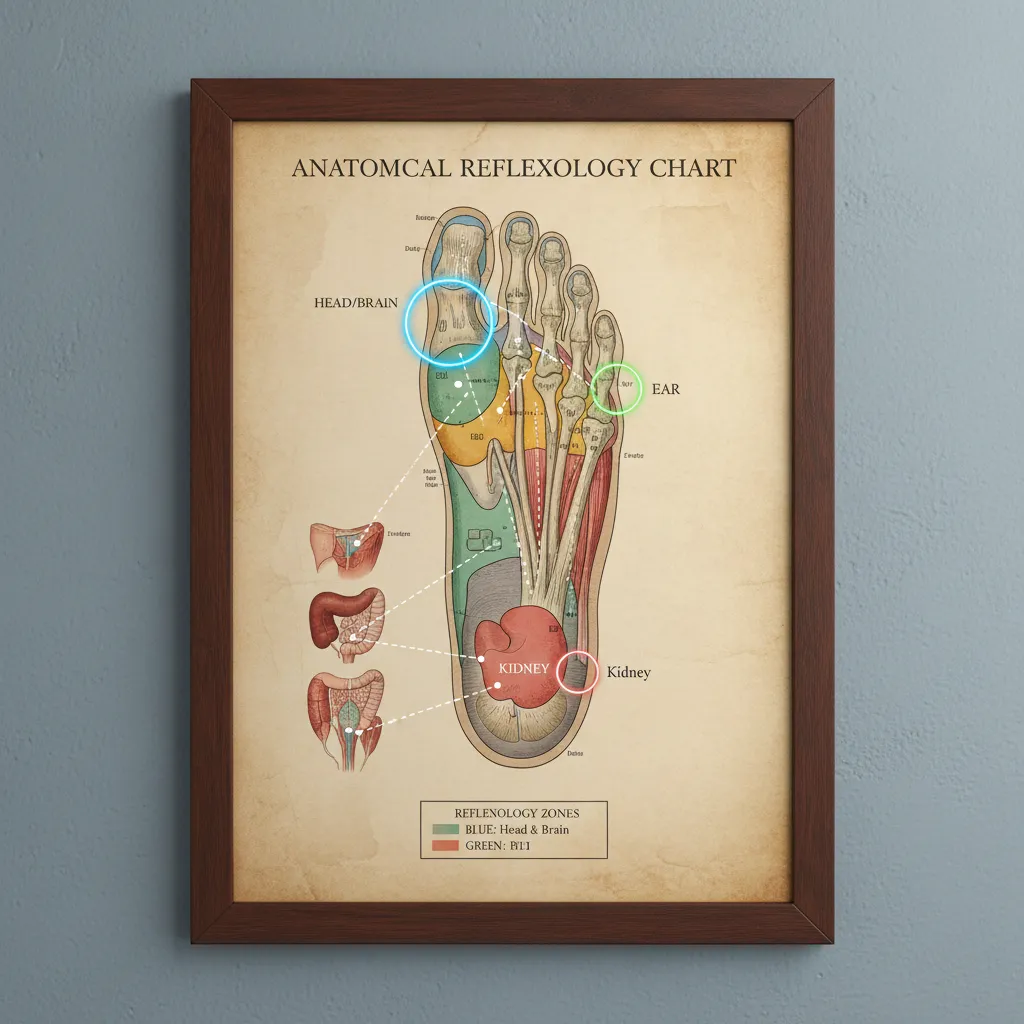
According to research highlighted by the National Institutes of Health (NIH), reflexology has demonstrated efficacy in reducing the intensity and duration of migraine attacks compared to control groups receiving placebo treatments. By mapping the foot to the human anatomy, we can target the head, spine, and digestive organs to provide holistic relief.
The Big Toe Brain Reflex: The Command Center
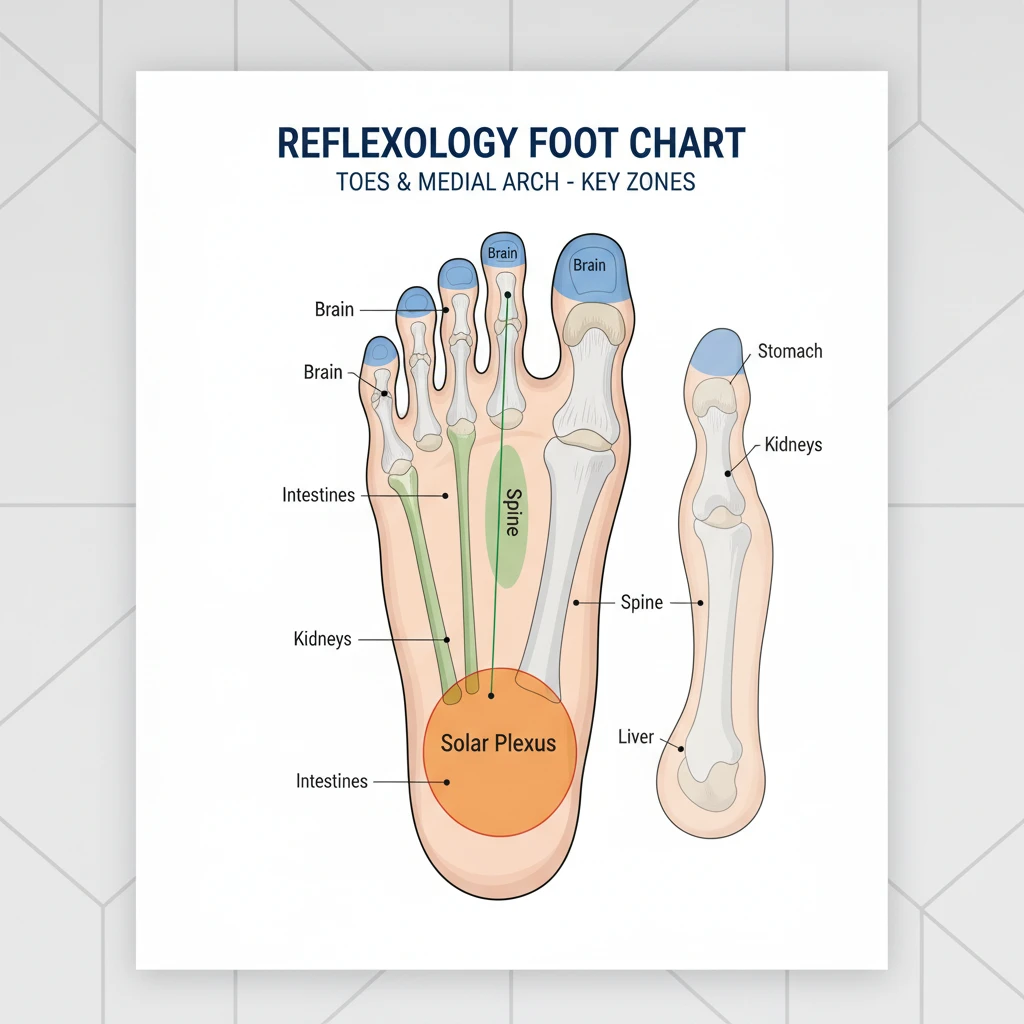
When discussing reflexology points for migraines, the big toe is arguably the most critical anatomical structure to understand. In reflexology mapping, the toes represent the head and neck area, with the big toe serving as the direct reflex for the brain, pituitary gland, and upper cervical spine.
Anatomy of the Reflex
The pad of the big toe corresponds to the brain and the pituitary gland. The pituitary is often called the “master gland” because it regulates hormones throughout the body. Since many migraines—especially in women—are hormonally driven, stimulating the center of the big toe pad can help regulate endocrine function.
Technique for Relief
- Stabilize the Foot: Hold the foot firmly with one hand.
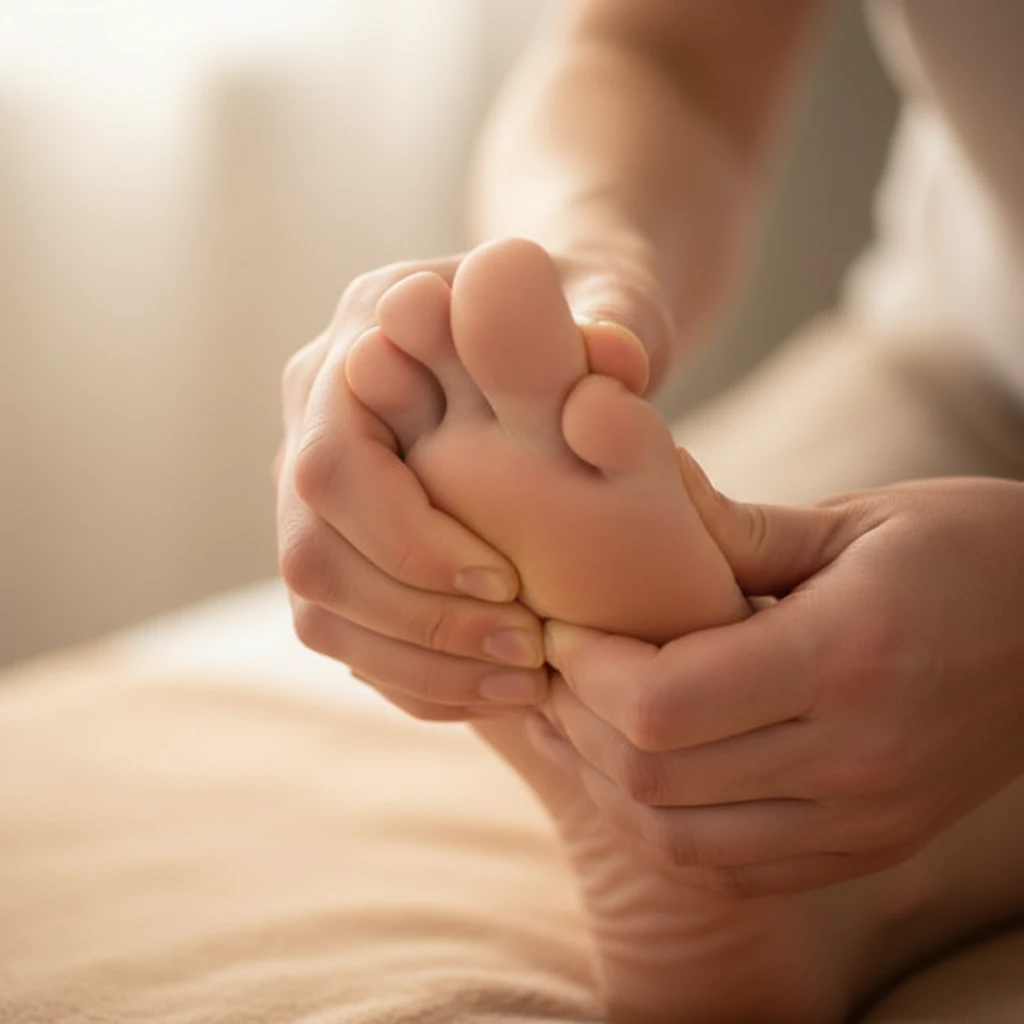
- Thumb Walking: Use the thumb of your working hand to “walk” up the pad of the big toe. Apply firm pressure, moving from the base of the nail bed to the tip of the toe.
- The Neck Reflex: The base of the big toe, where it connects to the foot, represents the neck. Many tension migraines originate from cervical stiffness. Apply a circular rotation technique around the base of the toe to release neck tension.
- Cross-Fiber Friction: If you detect “crunchy” deposits (often referred to as crystals or calcium deposits) in the big toe, apply cross-fiber friction to break them down. This often correlates with clearing head congestion.
Liver Points for Ocular Migraines
Ocular migraines, characterized by visual disturbances, auras, or sensitivity to light, are frequently linked to the liver meridian in Traditional Chinese Medicine (TCM) and reflexology theory. The liver is responsible for the smooth flow of Qi (energy) and blood; when this flow is stagnated by stress or toxicity, it can manifest as pressure behind the eyes or at the temples.
Locating the Liver Reflex
In Western reflexology, the liver organ reflex is located on the right foot only, just below the diaphragm line on the outer side. However, for migraines, we often incorporate the acupressure point Tai Chong (LV3), which is highly accessible and effective.
The LV3 Connection
While strictly an acupoint, LV3 is utilized by reflexologists to clear the head. It is located on the top of the foot, in the depression between the tendons of the big toe and the second toe.
Protocol for Ocular Relief:
- Step 1: Locate the webbing between the first and second toe. Slide your finger about one inch up the top of the foot until you feel a depression between the bones.
- Step 2: Apply deep, sustained pressure for 5 to 10 seconds. This point can be quite tender in migraine sufferers.
- Step 3: Release and repeat. This helps draw energy downward, away from the head, relieving the vascular pressure causing the ocular disturbance.
Calming the Vagus Nerve and Nervous System
The vagus nerve is the longest cranial nerve in the body, running from the brainstem down to the abdomen. It is the main component of the parasympathetic nervous system. Dysregulation of the vagus nerve is a known contributor to chronic migraines and nausea.
The Solar Plexus Reflex
To calm the vagus nerve via reflexology, we target the solar plexus point. This is often described as the “kidney 1” point in acupuncture but is known as the solar plexus reflex in foot reflexology.
Location: Flex your toes toward the sole of the foot. A depression will form in the center of the foot, just below the ball of the foot (metatarsal heads). This is the solar plexus reflex.
Technique:
Press your thumb deeply into this pivot point as the patient (or yourself) inhales deeply. Hold the pressure during the inhalation, and slightly release during the exhalation. This breathing synchronization manually downregulates the nervous system, switching off the stress response that fuels migraine pain.
The Spinal Twist
The vagus nerve interacts closely with the spine. The spinal reflex runs along the medial (inner) edge of the foot, from the heel to the big toe. Performing a “spinal twist”—gently twisting the foot by holding the heel and the toes and rotating in opposite directions—can help release tension along the entire spinal column, facilitating better nerve communication.
Additional Critical Reflex Points
While the brain, liver, and vagus nerve are the primary targets, a comprehensive migraine protocol should also include the following areas to ensure systemic balance.
The Adrenal Glands
Located just above the kidney reflex (near the solar plexus), the adrenal glands produce cortisol. Chronic stress leads to adrenal fatigue or overactivity, a major trigger for inflammation. Stimulating the adrenal reflex helps regulate stress hormones.
The Gallbladder Reflex
If the migraine is one-sided (unilateral) or located at the temples, the gallbladder meridian is likely involved. In reflexology, the gallbladder reflex is located on the top of the foot, near the fourth and fifth toes. Working this area can help alleviate temporal throbbing.
Techniques and Best Practices
Effective reflexology requires more than just knowing where to press; it requires knowing how to press. The texture of the tissue changes when an imbalance is present.
Thumb Walking
This is the signature move of reflexology. Bend the thumb at the first joint and “inchworm” forward. This allows for deep, specific pressure without tiring the hand. It is essential for working the small surface area of the big toe.
Hook and Back-Up
For specific points like the pituitary or adrenal reflexes, use the “hook and back-up” technique. Press in with the thumb, hook it to the side to catch the reflex point, and then pull back. This digs deeper into the specific nerve ending.
Frequency of Maintenance Sessions
Reflexology is cumulative. A single session may provide temporary relief, but a dedicated protocol is required for long-term management.
Acute Phase
During a migraine attack or a cluster period, daily self-reflexology is recommended. Focus on the big toe and solar plexus for 10-15 minutes to manage pain levels.
Preventative Maintenance
For chronic sufferers, professional sessions are recommended once a week for 4 to 6 weeks. This allows the body to establish a new baseline of relaxation and vascular regulation. Once the frequency of migraines decreases, maintenance sessions can be spaced out to once every two weeks or once a month.
Consistency is key. Just as one workout does not build a physique, one reflexology session does not permanently rewire the nervous system. Regular stimulation of these points trains the body to remain in a parasympathetic state, raising the threshold for migraine triggers.

For further reading on the physiological impacts of reflexology, resources from the Mayo Clinic provide excellent overviews of integrative medicine practices.
People Also Ask
Where do you press on your foot for a migraine?
To relieve a migraine, press primarily on the pad of the big toe, which corresponds to the brain and head. Additionally, applying pressure to the web between the big toe and the second toe (LV3) can help relieve tension and ocular pressure.
Does rubbing your big toe help with headaches?
Yes, rubbing the big toe can help with headaches. In reflexology, the big toe contains the reflexes for the brain, pituitary gland, and neck. Massaging this area increases blood flow to the head and releases cervical tension.
What is the pressure point for ocular migraines?
The primary pressure point for ocular migraines is LV3 (Tai Chong), located on the top of the foot in the depression between the first and second metatarsal bones. Stimulating this point helps clear visual disturbances and liver stagnation.
How long does it take for reflexology to work on a migraine?
Relief can be felt within minutes during a session, particularly when the solar plexus and brain reflexes are stimulated. However, lasting results and a reduction in migraine frequency usually require consistent sessions over 4 to 6 weeks.
Can reflexology make a migraine worse?
Occasionally, a “healing crisis” can occur where symptoms briefly intensify as the body detoxifies and rebalances. However, this is rare. Generally, reflexology reduces pain. If pain increases, lighter pressure should be used.
What part of the hand is for migraines?
On the hand, the He Gu point (LI4) is the most effective for migraines. It is located in the webbing between the thumb and index finger. Squeezing this area can alleviate frontal headaches and toothaches.