Hand reflexology for headache relief is a holistic therapy that involves applying targeted pressure to specific zones on the hands, primarily the He Gu (LI4) point and the thumb. This practice stimulates nerve endings to clear energy blockages, reduce systemic tension, and alleviate pain signals associated with migraines and tension headaches without pharmaceutical intervention.
Introduction
In our modern, high-velocity world, headaches have become a ubiquitous companion for many. Whether driven by the glare of blue-light screens, the relentless pressure of deadlines, or chronic dehydration, the throbbing pain of a headache can derail productivity and ruin quality of life. While over-the-counter painkillers are a common go-to, they often mask symptoms rather than addressing the root cause of the tension. This is where the ancient art of reflexology enters the conversation.
Hand reflexology is not merely a hand massage; it is a precise, therapeutic modality rooted in the principle that the hands act as a mirror to the body. By manipulating specific reflex points, we can influence the organs, glands, and parts of the body that correspond to those points. For headache sufferers, the hands offer a unique advantage: accessibility. Unlike foot reflexology, which requires removing shoes and finding a private space, hand reflexology for headache relief can be performed anywhere—during a board meeting, on a crowded subway, or while waiting in traffic.
This comprehensive guide will walk you through the most effective pressure points, specifically focusing on the renowned He Gu point, and provide you with discreet, on-the-go techniques to manage pain the moment it strikes.
The Science and Theory Behind Hand Reflexology
Reflexology is often categorized under the umbrella of Complementary and Integrative Health. It operates on the theory of “zone therapy,” which divides the body into ten vertical zones—five on the right side and five on the left. These zones extend from the tips of the toes up to the head and down to the fingertips. Energy, often referred to as “Qi” (pronounced ‘chee’) in Traditional Chinese Medicine (TCM), flows through these zones. When this flow is blocked due to stress, injury, or illness, pain and disease can manifest.
From a physiological perspective, pressing on these reflex points stimulates the thousands of nerve endings located in the hands. This stimulation sends a signal through the peripheral nervous system to the central nervous system, where it is processed. The brain then responds by releasing endorphins—the body’s natural painkillers—and reducing cortisol levels, which helps to relax the muscles and blood vessels that may be contributing to the headache.
While scientific studies are ongoing, research cited by organizations like the National Center for Complementary and Integrative Health (NCCIH) suggests that reflexology may be effective in reducing pain and psychological stress, making it a viable adjunct therapy for chronic headache sufferers.
The He Gu Point (LI4): The Master Headache Switch
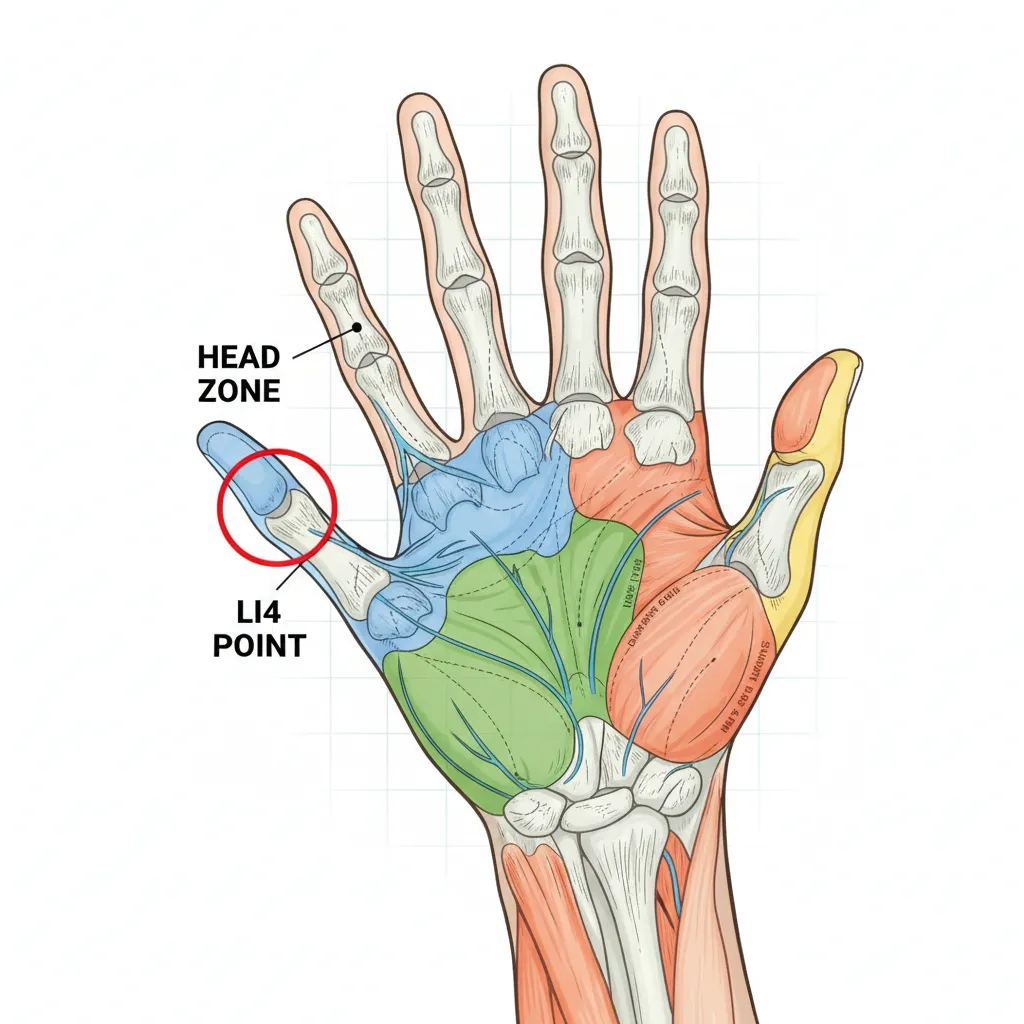
If you learn only one technique from this guide, it should be the manipulation of the He Gu point, also known as Large Intestine 4 (LI4). In the realm of acupressure and reflexology, this is arguably the most famous point for pain relief, particularly for issues affecting the head and face.
Locating the He Gu Point
- Hold your hand open with fingers extended.
- Squeeze your thumb against the side of your index finger.
- Notice the muscle that bulges up between the two digits. The highest point of that bulge is the LI4 point.
- Relax your thumb again; the point is in the depression where the bones of the thumb and index finger meet in a ‘V’ shape.
How to Stimulate LI4 for Relief
To perform hand reflexology for headache relief using this point, follow this protocol:
- Positioning: Use the thumb and index finger of your opposite hand to pinch the webbing. Your thumb should be on the back of your hand, and your index finger on the palm side.
- Pressure: Apply firm, steady pressure. You should feel a sensation that is often described as a dull ache or “good pain.” If it is sharp or piercing, you are pressing too hard or pinching the skin rather than the muscle.
- Movement: Massage the area in small circular motions or apply a pumping action (press and release) for 1 to 2 minutes.
- Breathing: While massaging, take slow, deep breaths. Inhale for a count of four, hold for four, and exhale for four. This oxygenates the blood and aids in relaxation.
- Repeat: Switch hands and repeat the process on the other side.
This point is renowned for treating frontal headaches, toothaches, and sinus pressure. However, it is powerful and moves energy downward rapidly.
Thumb Massage for Brain and Pituitary Relief
In the map of hand reflexology, the thumb represents the head. The tip of the thumb corresponds to the brain, the sinuses, and the pituitary gland—the master gland of the endocrine system which regulates hormones. Hormonal imbalances are a frequent trigger for migraines, making the thumb a critical area for work.
The Thumb Walking Technique
Rather than simply squeezing the thumb, reflexologists use a technique called “thumb walking” or “caterpillar walking.” This ensures deep, consistent coverage of the reflex zone.
- Support the Thumb: Hold the thumb of the hand you are working on firmly with the fingers of your working hand to prevent it from bending backward.
- The Brain Zone: Use the thumb of your working hand to press into the fleshy pad of the target thumb. Press down, rock forward slightly, release, and move a tiny step forward. Walk your thumb across the entire pad, from the center to the sides.
- The Pituitary Point: Locate the very center of the thumb print (the whorl). Press deeply into this point with the corner of your thumbnail or a knuckle for 30 seconds. This targets the pituitary gland and pineal gland, helping to regulate sleep-wake cycles and hormonal headaches.
- The Neck Reflex: The base of the thumb, where it joins the hand, corresponds to the neck. Many tension headaches originate from neck stiffness. Massage around the base of the thumb in a ring-like motion to release cervical tension.
Additional Pressure Points for Holistic Relief
While the LI4 and thumb are the primary targets, a holistic approach involves addressing secondary points that may be contributing to the headache, such as stress or digestive issues.
The Solar Plexus Point
Stress is a leading cause of tension headaches. The solar plexus reflex point is the emotional center of the hand.
- Location: Look at your palm. Draw a line down from the middle finger. The point is located just below the ball of the foot of the fingers, in the center of the palm. If you cup your hand slightly, it is the deepest hollow in the center.
- Technique: Press your thumb into this hollow. Take a deep breath and press in as you exhale. Hold for 10 seconds and release. Repeat this three times to calm the nervous system.
Fingertips for Sinus Headaches
If your headache is concentrated behind the eyes or cheekbones, it is likely sinus-related. The pads of all four fingers (index, middle, ring, pinky) contain sinus reflexes.
- Technique: Firmly press and rub the pad of each finger, starting from the tip and moving down toward the top knuckle. This can help drain sinus congestion and relieve the pressure causing the headache.

Technique Guide: How to Apply Pressure Correctly
The effectiveness of hand reflexology for headache relief depends largely on the quality of the touch. Novices often make the mistake of rubbing the skin surface, which creates friction but does not stimulate the underlying nerve reflexes.
The Hook and Back-Up Method:
To access deep reflexes, use the “hook in and back up” technique. Place your thumb on the point, press in deeply to engage the tissue, and then pull the thumb slightly back (proximal) while maintaining pressure. This hooks the reflex point against the underlying bone structure.
Rotational Friction:
Place the thumb or finger on the point and rotate the tissue over the bone in small, concentric circles. Do not slide over the skin; the skin and your finger should move as one unit over the muscle and bone beneath.
Duration and Frequency:
For acute headache relief, work the points for 5 to 10 minutes. You can repeat this every two hours if necessary. Drink a glass of water immediately after a session to help flush out metabolic waste products released from the tissues.
Discreet Techniques for the Office and Commute
One of the strongest selling points of hand reflexology is its stealth. You do not need to announce to your colleagues that you are in pain. Here are three scenarios for on-the-go relief:
The “Under the Table” Conference Room Method
During a stressful meeting, keep your hands in your lap under the table. Use one hand to firmly grip the He Gu (LI4) point of the other. Hold this static pressure for 30 seconds at a time. To observers, it simply looks like you are clasping your hands.
The Steering Wheel Squeeze
Note: Only perform this when stopped safely at a red light or in gridlock.
Traffic is a major trigger for tension headaches. While stopped, wrap your hands around the steering wheel. Use the resistance of the wheel to press the solar plexus point in the center of your palm against the hard surface of the wheel. Alternatively, use one hand to massage the thumb of the other while waiting for the light to change.
The Keyboard Break
Typing creates tension in the forearms and hands, which travels up to the neck and head. Every hour, drop your hands to your sides and shake them vigorously for 10 seconds to increase blood flow. Then, spend 30 seconds pinching the tips of each finger (sinus points) before returning to typing.
Hand vs. Foot Reflexology: When to Choose Which
Is hand reflexology as effective as foot reflexology? The answer depends on your goals and your environment.
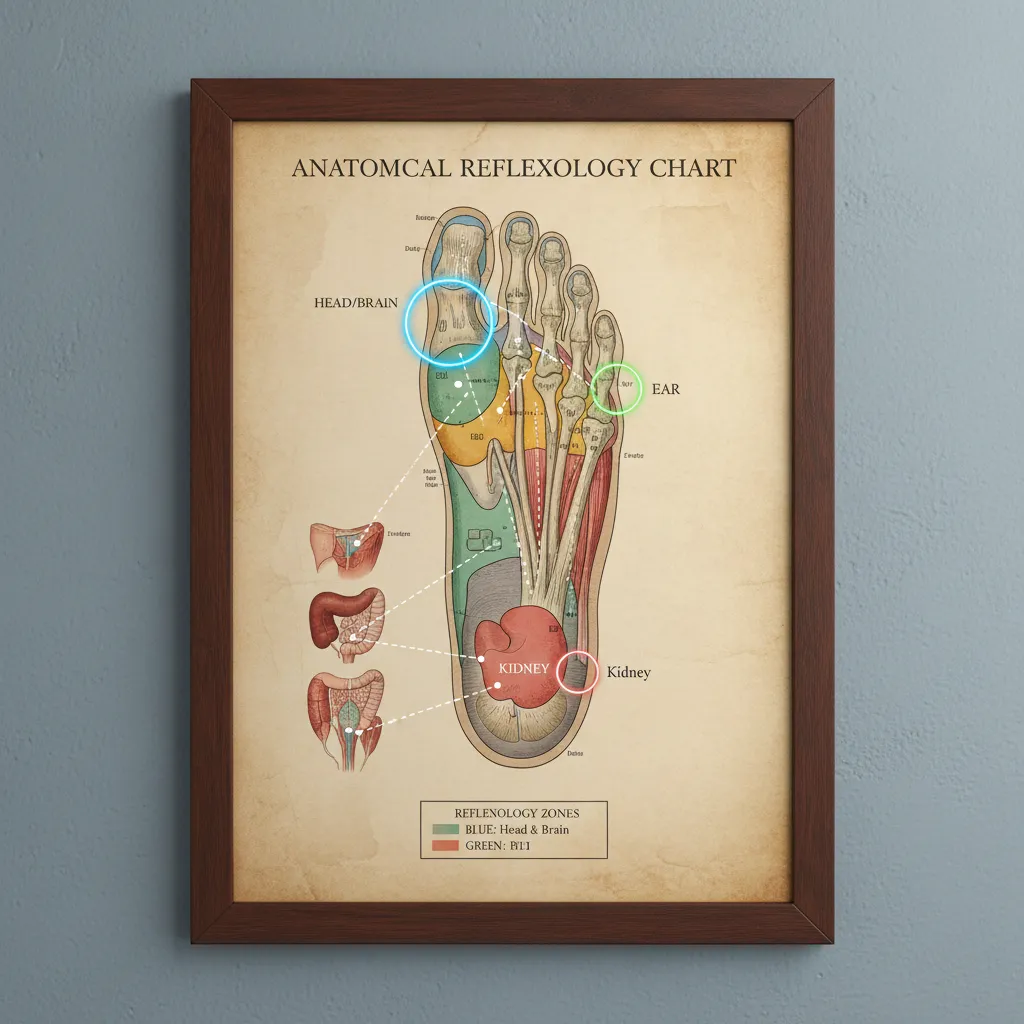
Foot Reflexology is generally considered more potent for systemic, chronic issues. The feet are usually protected by shoes and socks, making them more sensitive to touch than the hands, which are constantly exposed to tactile stimuli. The reflex points on the feet are also larger and easier to map.
Hand Reflexology, however, is superior for immediate, acute relief—specifically for headaches. Because the hands are closer to the head and trunk, some practitioners argue the neural pathways are shorter. The primary advantage, however, is accessibility. You cannot massage your feet in a business meeting, but you can massage your hands. For “on-the-go” maintenance and acute pain management, hands are the clear winner.
Safety, Contraindications, and Best Practices
While reflexology is non-invasive and generally safe, there are critical precautions to consider.
Pregnancy Warning
CRITICAL: The He Gu (LI4) point is well-known in TCM for inducing labor. It stimulates strong downward energy and uterine contractions. Pregnant women should avoid stimulating the LI4 point entirely unless under the direct supervision of a qualified acupuncturist or midwife during labor induction. If you are pregnant and have a headache, stick to the gentle massage of the fingertips (sinuses) and avoid the web of the hand.
Injury and Inflammation
Do not perform reflexology on a hand that is injured, bruised, or has open wounds. If you have arthritis in your hands, be gentle; deep pressure may exacerbate joint pain. In such cases, shorter sessions with lighter pressure are recommended.
Hydration
Reflexology moves fluid and energy. It is imperative to drink water after a session. Failure to hydrate can sometimes lead to a “healing crisis,” resulting in mild nausea or a temporary worsening of the headache as toxins circulate before being eliminated.
By integrating these hand reflexology techniques into your daily routine, you empower yourself with a natural, immediate tool for pain management. Whether it is the sharp stab of a migraine or the dull ache of tension, relief is literally in your hands.
Frequently Asked Questions
How quickly does hand reflexology work for headaches?
Many people experience relief within 5 to 10 minutes of stimulating the He Gu (LI4) point. However, the speed of relief depends on the severity of the headache and how early you catch it. Starting reflexology at the first sign of tension yields the fastest results.
Can hand reflexology cure migraines?
Reflexology is not a “cure” for the underlying neurological condition of migraines, but it is an effective management tool. It can reduce the intensity and duration of a migraine attack and, when practiced regularly, may reduce the frequency of episodes by lowering overall stress levels.
How hard should I press on the reflex points?
Pressure should be firm enough to feel a sensation often described as “good pain” or a dull ache, but it should never be excruciating. If you feel sharp, shooting pain, decrease the pressure. The goal is stimulation, not bruising.
Is it safe to do hand reflexology every day?
Yes, hand reflexology is safe for daily practice. In fact, performing a quick 5-minute routine daily can act as a preventative measure, keeping stress levels low and energy flowing smoothly, which helps prevent tension headaches from forming.
Which hand should I use for headache relief?
Ideally, you should work on both hands. However, reflexology theory suggests the right hand corresponds to the right side of the body and the left hand to the left side. If you have a one-sided headache (like a migraine), you may wish to focus more time on the hand corresponding to the painful side.
Can I use lotions or oils for hand reflexology?
While not strictly necessary, using a small amount of lotion or essential oil (like peppermint or lavender) can reduce friction and make the massage more pleasant. Peppermint oil is particularly good for headaches due to its cooling and analgesic properties.