Reflexology for sinus congestion is a holistic therapy that involves applying targeted pressure to specific points on the feet, hands, and face known as reflex zones. By stimulating these areas—particularly the pads of the toes and fingers—practitioners aim to clear blocked energy pathways, improve blood circulation, and facilitate the natural drainage of mucus from the sinus cavities.
Sinus congestion is more than just a stuffy nose; it is a debilitating condition that can lead to blinding headaches, facial tenderness, and a general sense of fatigue that permeates your entire day. While over-the-counter decongestants provide temporary relief, they often come with side effects like drowsiness or rebound congestion. Consequently, many sufferers are turning to ancient modalities for a more sustainable, natural solution. Reflexology, a practice rooted in Traditional Chinese Medicine (TCM) and modern zone theory, offers a powerful, non-invasive method to alleviate this pressure.
This comprehensive guide explores the mechanisms of reflexology for sinus congestion, providing you with actionable techniques to perform self-treatment at home. For a broader Understanding Reflexology: A Comprehensive Guide, including its history and other applications, please see our main resource.
The Science Behind Reflexology and Sinus Health
Reflexology operates on the principle that the body is mapped onto the feet, hands, and ears. For instance, specific points on the feet can also be used for targeting lower back pain via foot mapping or for exploring Reflexology Protocols for Sciatica Relief. The body is divided into ten longitudinal zones—five on the left side and five on the right. When a specific point in these zones is stimulated, it sends a signal through the peripheral nervous system to the central nervous system, which then relays a message to the corresponding organ or system to relax and heal.
In the context of sinus health, the theory suggests that congestion is often a result of stagnation—fluid and inflammation trapped within the cavities of the skull. By manipulating the nerve endings in the feet that correspond to the head and neck, we can increase blood flow to the sinus area. This increased circulation brings fresh oxygen and nutrients while helping to flush out metabolic waste and reduce inflammation.
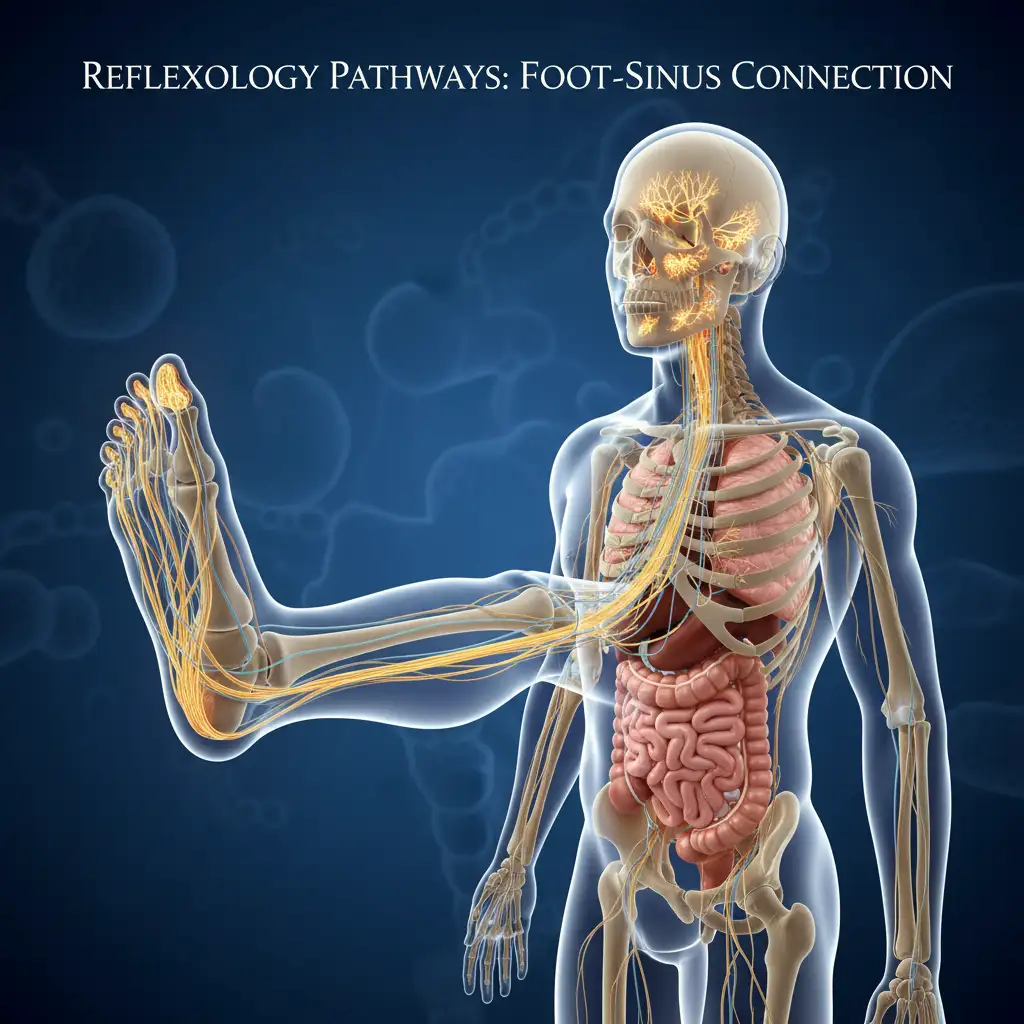
Furthermore, reflexology induces a state of deep relaxation. Since stress is a known exacerbator of inflammation and immune system suppression, the parasympathetic response triggered by a reflexology session can indirectly boost the body’s ability to fight off the infection or allergen causing the congestion.
The Foot Map: Toe Tips and Sinus Cavities
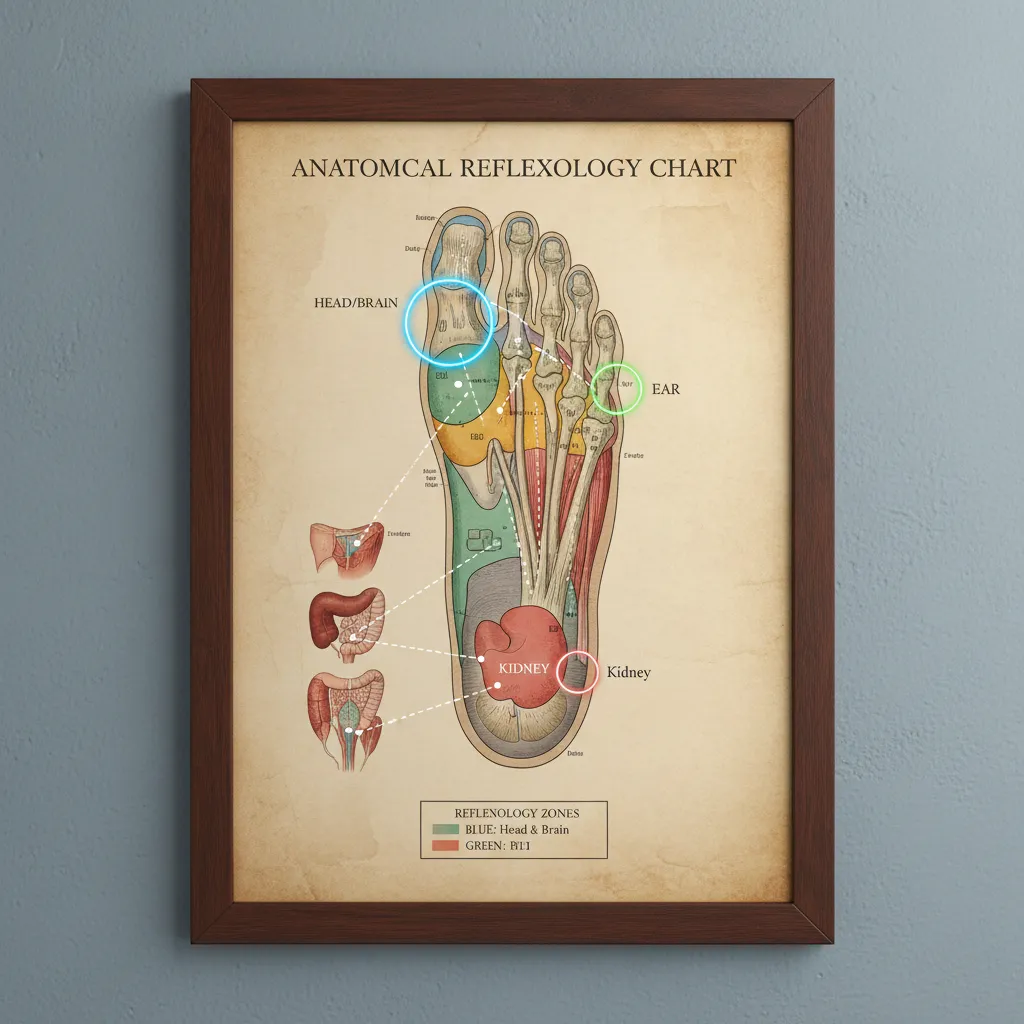
The most potent reflex points for the sinuses are located on the plantar (bottom) aspect of the toes. Understanding the specific geography of the foot is crucial for effective treatment. In reflexology charts, the big toe represents the head and brain, while the four smaller toes correspond to the sinuses, eyes, and ears.
Locating the Sinus Points
The sinus reflexes are specifically found on the pads or “pulps” of the five toes. The left foot corresponds to the left side of your face, and the right foot corresponds to the right side. This bilateral symmetry allows you to target unilateral congestion effectively.
- The Big Toe: While primarily the brain reflex, the side of the big toe also impacts the neck and nose area.
- Toes 2, 3, 4, and 5: The fleshy pads of these toes are the direct reflex points for the frontal and maxillary sinuses.
The Caterpillar Walk Technique
To perform reflexology for sinus congestion on the feet, you should use a technique often referred to as “thumb walking” or the “caterpillar walk.” This ensures deep, consistent pressure without causing injury to the thumb.
- Preparation: Sit comfortably with one foot resting on the opposite knee. You may use a small amount of lotion or oil to reduce friction, though dry work provides better grip.
- Stabilize: Hold the toes steady with one hand.
- Stimulate: Use the thumb of your working hand to press into the pad of the big toe. inch your thumb across the pad, pressing and releasing in a rhythmic motion.
- Focus on the Smaller Toes: Move to the second toe. Press firmly into the center of the pad, hold for 5 seconds, and release. Repeat this on all toes.
- The “Drainage” Motion: After pressing, use a downward stroking motion from the tip of the toe toward the base of the toe. This mimics the action of draining the sinus cavity.
Repeat this process three times on each foot. You may notice that certain toes feel “crunchy” or sensitive; this indicates crystal deposits or blockages in the energy flow, suggesting you should spend extra time on that specific area.
Hand Reflexology for On-the-Go Relief
While foot reflexology is generally considered more powerful due to the size of the reflex areas, hand reflexology is incredibly convenient for acute attacks of sinusitis when you are at work or in public. The mapping is very similar to the feet.
The pads of the fingers represent the sinus cavities. To alleviate congestion:
- Pinch and Roll: Use the thumb and forefinger of one hand to grasp the fingertip of the other. Apply firm pressure to the pad of the finger, rolling it gently.
- The Webbing: A critical point for general pain relief and congestion is the He Gu point (LI4 in acupuncture), located in the webbing between the thumb and index finger. Applying firm, circular pressure here can help relieve frontal headaches associated with sinus pressure. Note: Do not stimulate this point if you are pregnant, as it can induce contractions.
Facial Reflexology: Lymphatic Drainage for the Face
Facial reflexology differs slightly from foot reflexology as you are working directly over the affected area, combining nerve stimulation with manual lymphatic drainage (MLD). When sinuses are inflamed, the lymph nodes in the neck and face can become overwhelmed, leading to puffiness and fluid retention.
The Mechanics of Drainage
The lymphatic system relies on muscle movement and manual manipulation to move fluid; it does not have a pump like the heart. By applying directional strokes, you can encourage the thick mucus and trapped lymph fluid to move toward the lymph nodes in the neck, where it can be processed and eliminated.
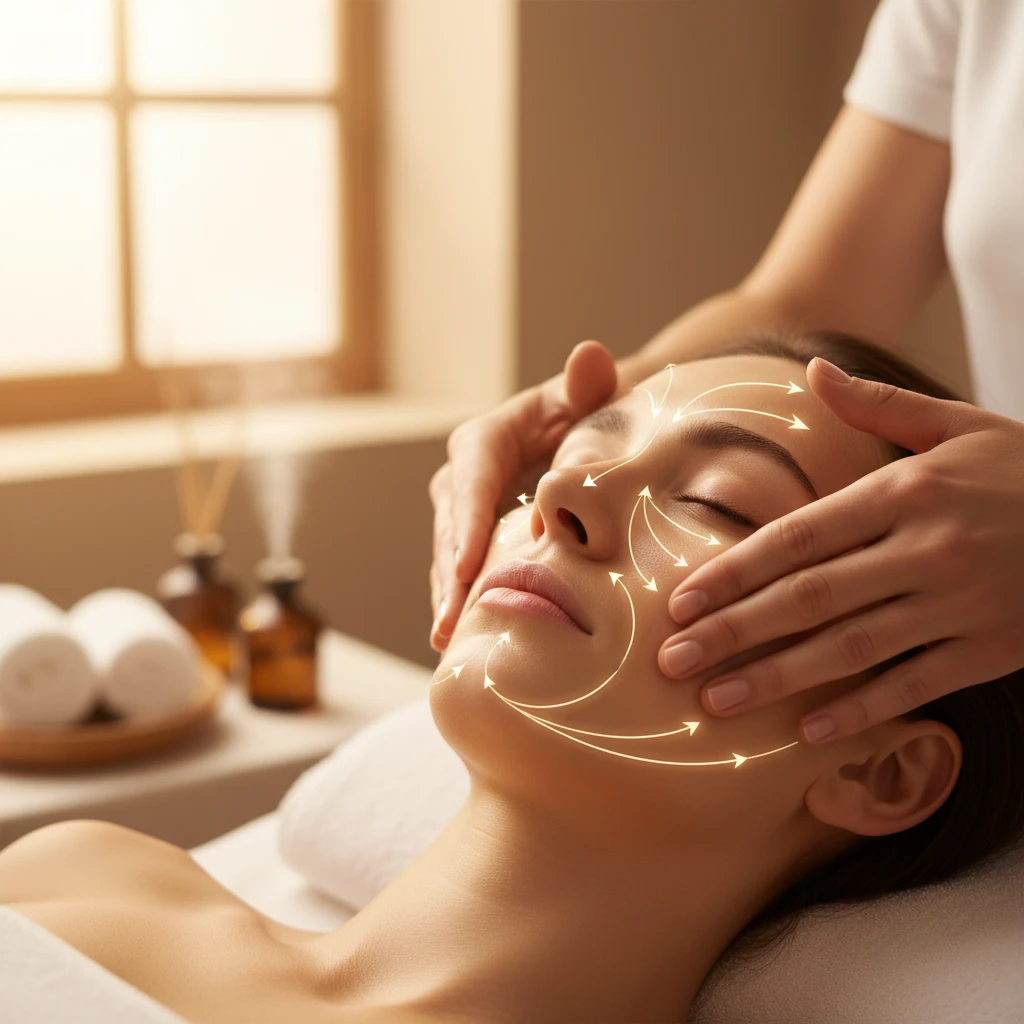
Step-by-Step Facial Massage
- Open the Terminus: Begin by gently pumping the area just above your collarbones (the clavicle) with your fingertips. This “opens the drain” for the fluid to exit the head.
- Maxillary Sinus Stroke: Place your index and middle fingers on either side of your nose, just below the cheekbones. Apply firm pressure and glide your fingers outwards toward your ears. Repeat 10 times.
- Frontal Sinus Stroke: Place your fingers in the center of your forehead, just above the eyebrows. Glide firmly outwards toward the temples.
- The Flush: Finish by stroking from the temples, down the sides of the neck, to the collarbones. This guides the fluid out of the facial area.
Targeting Specific Symptoms: Relieving Pressure Behind the Eyes
One of the most agonizing symptoms of sinusitis is the deep, throbbing pressure located directly behind the eyes. This occurs when the ethmoid and sphenoid sinuses are blocked. In reflexology, the eyes are mapped to the base of the second and third toes.
To target this specific pain:
- Foot Focus: Locate the ridge on the bottom of your foot where the toes meet the ball of the foot. Specifically, focus on the area under the second and third toes. Press deeply into this ridge and hold for 10 seconds. Release and repeat.
- Facial Point: On the face, apply pressure to the inner corners of the eyebrows (near the bridge of the nose). This point, known as Bladder 2 in acupuncture, is highly effective for relieving eye strain and sinus pressure. Press upward into the bone of the brow ridge for 10-15 seconds while breathing deeply.
Holistic Synergy: Combining with Steam Therapy
Reflexology is most effective when part of a multi-modal approach. Combining the nervous system stimulation of reflexology with the physical loosening properties of steam therapy creates a powerful synergy for relief.
Steam inhalation hydrates the mucous membranes and thins the mucus, making it easier to drain. When you perform reflexology immediately after or during a steam session, the body is already in a state of vasodilation (widening of blood vessels), making the reflex signals more efficient.
The Ultimate Sinus Relief Ritual
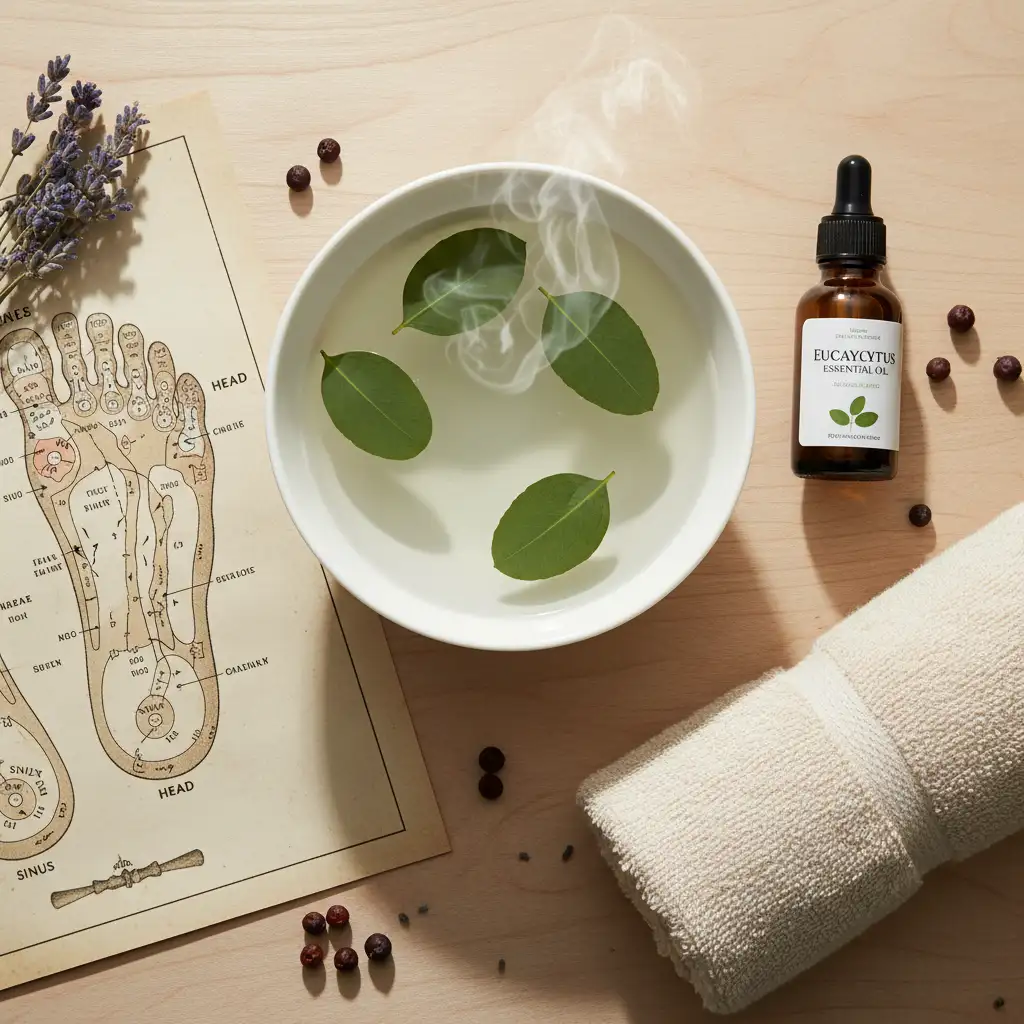
- Prepare a Steam Bowl: Boil water and pour it into a heat-safe bowl. Add 2-3 drops of high-quality eucalyptus or peppermint essential oil. Eucalyptus is known for its anti-inflammatory and decongestant properties. (Source: National Institutes of Health).
- Steam: Drape a towel over your head and lean over the bowl, inhaling the steam for 10 minutes.
- Reflexology: Immediately after steaming, while your body is warm and relaxed, perform the foot reflexology routine described above, followed by the facial lymphatic drainage.
- Hydrate: Drink a large glass of water to assist the lymphatic system in flushing out toxins.
Precautions and Best Practices
While reflexology is generally safe for most people, there are important precautions to consider. If you have a fever, a contagious skin condition on your feet (like athlete’s foot), or recent foot injuries, you should avoid foot reflexology or consult a professional. Additionally, those with a history of blood clots or deep vein thrombosis (DVT) should seek medical advice before stimulating circulation in the legs and feet.
It is also vital to recognize when holistic home remedies are insufficient. If your sinus congestion is accompanied by a high fever, severe facial swelling, vision changes, or a stiff neck, these could be signs of a serious bacterial infection or other complications. In such cases, professional medical intervention is necessary. For chronic issues, institutions like the Mayo Clinic recommend a thorough evaluation to rule out structural problems like nasal polyps or a deviated septum.
Reflexology for sinus congestion is a practice of patience and consistency. While some find relief instantly, for others, it requires daily practice to retrain the body’s inflammatory response. By integrating these techniques into your wellness routine, you empower yourself to manage sinus health naturally and effectively.
Frequently Asked Questions
Does reflexology really work for sinus congestion?
Yes, many people find relief through reflexology. While scientific studies on reflexology are ongoing, anecdotal evidence and smaller studies suggest that stimulating sinus reflex points can improve blood flow, reduce stress, and help the body naturally drain mucus, offering symptom relief for sinusitis sufferers.
Which toe is connected to the sinuses?
The four smaller toes (the second, third, fourth, and fifth toes) contain the reflex points for the sinuses. The fleshy pads or tips of these toes are the primary areas to target. The big toe is also relevant as it corresponds to the head and brain, influencing overall head congestion.
How long does it take for reflexology to relieve sinus pressure?
Relief can be immediate for some, occurring within minutes of stimulating the correct points. For others, especially those with chronic congestion, it may take several sessions over a few days to notice a significant reduction in pressure and inflammation.
Can I do reflexology on myself for sinus headaches?
Absolutely. Self-reflexology is highly effective. You can easily access the sinus points on your hands and feet. Hand reflexology is particularly useful for self-treatment during the day, while foot reflexology is ideal for a more comprehensive evening treatment.
Are there any side effects to sinus reflexology?
Side effects are generally mild and rare but can include a “healing crisis” where symptoms temporarily worsen as the body eliminates toxins. You might experience increased nasal drainage (a good sign), frequent urination, or mild fatigue immediately following a session.
How often should I perform reflexology for sinus relief?
For acute congestion, you can perform reflexology techniques 2-3 times a day for 10-15 minutes per session. For chronic maintenance and prevention, a daily session or a professional treatment once a week is recommended.